

If you’re facing oral surgery and feeling nervous, IV sedation can help make the experience much more comfortable. IV sedation uses medicine through a vein to help you relax deeply but stay able to respond to your dentist.
It eases anxiety and pain, making even long or complex procedures easier to handle. During your surgery, you will feel calm and drowsy, and you might not remember much afterward.
Your vital signs will be closely watched to keep you safe while you rest in this relaxed state. Knowing what to expect can help you feel more at ease before your appointment.
Getting ready for IV sedation involves following some important steps, like fasting and arranging for someone to drive you home. Understanding the process can reduce your stress and help you recover smoothly after surgery.
Key Takeaways
- You will feel relaxed and calm but can still respond during your procedure.
- Preparation, like fasting and transportation, is important for your safety.
- Recovery includes rest and careful aftercare to support healing.
Schedule a Safe IV Sedation Consultation in Fairfax, Manassas, Stafford, or Fredericksburg
Understanding IV Sedation for Oral Surgery
When you go through oral surgery with IV sedation, you’ll be given medicine that helps you relax deeply and feel comfortable. The sedation works quickly by entering your bloodstream.
IV sedation has a very low complication rate when administered by trained oral surgeons, with serious adverse events occurring in less than 1% of cases.
Sedation can vary in strength, and it’s different from other types of anesthesia, like local or general anesthesia. Knowing these differences helps you feel more prepared for your procedure.
How IV Sedation Works
IV sedation delivers sedative drugs directly into your veins through an IV line. This method acts fast, helping you feel calm and less aware of discomfort during surgery.
You may feel drowsy or drift into a light sleep, but you’re usually still breathing on your own and can respond to the doctor if needed. The sedation is adjustable during your procedure.
Your surgeon watches your vital signs closely to keep you safe. When the surgery ends, the medicine is slowly stopped, allowing you to wake up gently.
Some people might feel a bit confused or foggy for a short time afterward, which is normal. Make sure you arrange for someone to drive you home since you won’t be fully alert.
Levels of Sedation Compared
Sedation levels range from minimal to deep. With minimal sedation, you stay awake but very relaxed.
Moderate sedation, which is common for oral surgery, makes you drowsy and less aware of what’s happening, but you can still respond to instructions. Deep sedation means you are on the edge of or in a light sleep but can be awakened.
IV sedation often falls in the moderate to deep range, giving you pain relief and calmness during longer or complicated surgery. The care team controls the amount precisely to match your needs, helping you avoid being too awake or too asleep.
This balance makes the process smooth and helps reduce anxiety.
IV Sedation Versus General and Local Anesthesia
IV sedation is different from both local and general anesthesia. Local anesthesia numbs only the area where the surgery happens, so you stay awake and aware but don’t feel pain there.
IV sedation, on the other hand, relaxes you deeply, often making you forget the procedure. General anesthesia makes you completely unconscious, like being asleep for a long time, and usually involves a breathing tube.
It’s used for very complex surgeries. IV sedation doesn’t require a breathing tube because you keep breathing on your own.
Your oral surgeon will help you decide which option is best based on your health and the type of surgery.
Experience Comfortable Oral Surgery With IV Sedation in Northern Virginia
Who Is a Candidate for IV Sedation?
IV sedation is not for everyone. Whether you qualify depends on your anxiety levels, medical history, the type of oral surgery you need, and your oral surgeon’s evaluation.
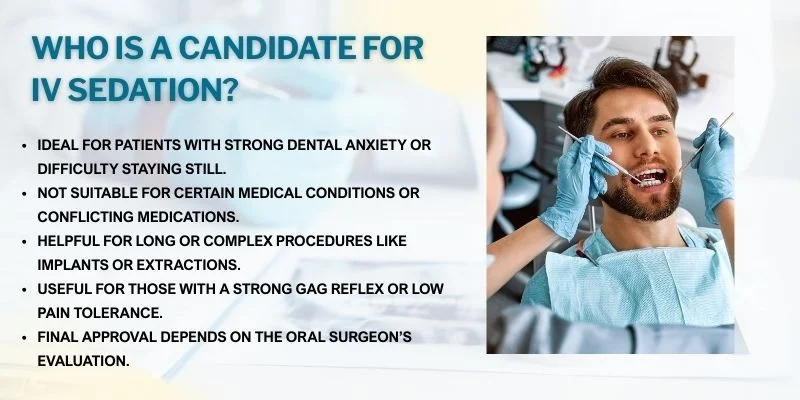
These factors all play a part in making sure sedation is safe and effective for you.
Patient Needs and Anxiety
If you feel very nervous about dental work, IV sedation can help you relax deeply during your procedure. Patients with dental anxiety or phobia often find it easier to handle treatment with this type of sedation.
Over 70% of dental patients report reduced anxiety and improved comfort with IV sedation.
It reduces stress and helps make long or complex surgeries less overwhelming. You might also be a good candidate if sitting still is hard for you due to pain or medical conditions like Parkinson’s disease.
IV sedation helps keep you calm and comfortable during the entire process.
Medical Conditions and Medications
Your overall health matters a lot. If you take blood pressure medications or other drugs, your oral surgeon will review them carefully.
Some medications can interact badly with sedatives, so honesty about your medical history is key. Certain health issues may affect your eligibility.
Uncontrolled diabetes, heart or lung problems, or sleep apnea can increase risks. Pregnant women are usually advised against IV sedation because of possible effects on the baby.
Types of Oral Surgery Procedures
IV sedation is helpful for longer or more difficult oral surgeries. If you need procedures like wisdom teeth removal, dental implants, or bone grafts, sedation can make the experience easier.
It helps you stay comfortable during hours of work. For people with a sensitive gag reflex or low pain tolerance, sedation reduces discomfort and allows the surgeon to work more smoothly.
Even if local anesthesia alone isn’t enough to numb the area, IV sedation boosts your comfort level.
Role of the Oral Surgeon
Your oral surgeon plays a big part in deciding if IV sedation is right for you. They will assess your health, discuss your fears, and explain how sedation works.
Your surgeon also monitors your vital signs during the procedure to ensure your safety. Before surgery, you’ll receive clear instructions about fasting and medication changes.
Afterward, the surgeon will guide you through recovery steps to keep you safe as the sedation wears off. Their expertise helps make your surgery less stressful and more manageable.
Learn If IV Sedation Is Right for Your Oral Surgery
How to Prepare for IV Sedation
Getting ready for IV sedation means following some clear steps to keep you safe and comfortable. It’s important to share your health details, manage your medicines the right way, and dress so the procedure is easier.

These small actions make a big difference in how smoothly everything goes.
Pre-Sedation Instructions
Before your oral surgery, your oral surgeon will ask about your medical history. Be ready to discuss any health problems you have, like heart disease or diabetes.
Tell them about allergies or any bad reactions you’ve had to anesthesia before. This helps the team plan the safest sedation for you.
You will also have your vital signs checked, such as blood pressure and heart rate, before the procedure. Monitoring these helps avoid risks during sedation.
If you are taking blood pressure medications or other prescriptions, mention them so your doctor knows what’s safe to continue. Doctors may ask you to avoid certain activities or foods before your surgery.
You might also be told to arrange for someone to drive you home because you won’t be able to drive after sedation.
Medication Guidelines
It is important to tell your oral surgeon about every medicine and supplement you take. Some medications can affect how sedation works or cause problems during surgery.
Blood pressure medications are often safe to take, but your doctor might give specific instructions about when or how to take them on the day of surgery. For other drugs, like blood thinners or diabetes medicines, you may need to stop or adjust your dose before sedation.
If you take daily medications regularly, follow your doctor’s advice about which ones to take with a small sip of water and which to skip until after the procedure. Never stop any medicine on your own.
Fasting and Clothing Tips
You will need to avoid eating or drinking anything for at least 6 to 8 hours before your surgery. This fasting helps prevent nausea and other risks during anesthesia.
Sometimes, small sips of water are allowed if you need to take important medicine. Wear loose, comfortable clothes with short sleeves.
This makes it easier for the medical team to place the IV line, usually in your arm or hand. Avoid jewelry, makeup, or contact lenses on the day of surgery.
Bring a light jacket or sweater; you might feel cold during the procedure. Finally, arrange for a ride home, as sedation will leave you drowsy and unable to drive safely after surgery.
The Day of Your Oral Surgery Procedure
Your surgery day will start with some simple steps to get you ready. You’ll be closely watched to keep you safe and comfortable.
The process will include placing an IV, managing your pain, and going through the specific procedure, like dental implants, with care.
Arrival and Monitoring
When you arrive, you’ll check in and speak with your oral surgery team. They will ask about your health and any last-minute questions you have.
You’ll change into comfortable clothing if needed. A nurse will place a small IV line in your arm or hand to give you sedation medicine.
You might get a numbing cream first to reduce any sting. During surgery, your heart rate, breathing, oxygen level, and blood pressure are constantly monitored.
This keeps you safe and helps the team adjust the sedation to keep you relaxed but responsive.
Procedure Steps with IV Sedation
Once the IV sedation starts, you’ll feel calm within minutes. You may drift in a relaxed state called “twilight sleep.”
You won’t feel pain and might not remember the procedure afterward. The oral surgeon will numb your mouth with local anesthesia so you won’t feel anything during the work.
You’ll stay in this relaxed state the whole time. The team will keep checking your comfort and safety throughout the surgery.
You may think it feels like just moments passed, even if it takes a while.
Pain Control and Comfort
The IV sedation helps you avoid pain and anxiety during the procedure. Besides sedation, local anesthesia blocks any pain in your mouth.
After surgery, you may feel drowsy and groggy for hours. Your team will give you written instructions on pain medicine, swelling control, and care for your mouth.
Have a responsible adult drive you home. Rest and avoid any heavy activities.
Drinking fluids and following your instructions will help you recover better.
Common Oral Surgery Procedures like Dental Implants
Dental implants are a common surgery done with IV sedation to make the process easier for you. Implants involve placing a small metal post in your jaw bone to replace missing teeth.
With sedation, you won’t feel pain or stress during drilling or placing the implant. The oral surgeon may also perform bone grafts or other steps needed for a strong implant.
Other procedures like wisdom tooth removal or gum surgery are also often done this way to keep you calm and pain-free throughout the treatment.
Sedation Recovery and Aftercare
After IV sedation for oral surgery, your body needs time to return to normal. You may feel tired, groggy, or a bit confused for several hours.
How you care for yourself in the first day will affect your comfort and healing.
Waking Up After IV Sedation
When your procedure ends, the sedative is stopped or reduced, and oxygen is given to help clear the drugs from your body. You’ll slowly regain awareness but might still feel drowsy or foggy for a few hours.
It’s normal to have some memory gaps or feel uncoordinated. Your dental team will watch your vital signs and check if you can sit, stand, and answer simple questions before letting you leave.
Because of the sedation’s effects, you must have an adult escort to take you home and stay with you, as you won’t be able to drive or make important decisions safely.
Post-Procedure Care
Once home, rest quietly and avoid any strenuous activity. Start with small sips of water.
When you feel ready, eat soft, bland foods like yogurt or soup. Avoid hot or spicy meals.
Follow the medication schedule exactly, especially for pain relief. Do not take any extra sedatives or alcohol.
Keep your medications and any other dangerous items out of reach if you’re very groggy. Your escort should help remind you when to take meds and watch for unusual signs.
If you experience severe pain, difficulty breathing, heavy bleeding, or confusion, call your dentist immediately. These are red flags needing prompt attention.
When to Resume Activities
Plan to avoid driving, operating machinery, or making important decisions for at least 24 hours after IV sedation. Your coordination and judgment will be impaired during this time.
Light walking is fine, but avoid heavy lifting, exercise, or work requiring focus for the rest of the day. If you still feel tired or dizzy, give yourself more time to recover.
Keeping your schedule low-stress and having someone with you will help make your recovery smooth and safe.
Frequently Asked Questions
Knowing how to get ready, what you might feel, and safety steps can help you feel calm about IV sedation. It’s important to follow instructions carefully and understand what happens before, during, and after your procedure.
How should one prepare for IV sedation prior to dental surgery?
You should not eat or drink anything for at least 8 hours before your surgery. Drinking clear water is usually okay up to 2 hours before the procedure, but check your doctor’s advice.
Wear loose, comfortable clothes with short sleeves for easy IV access. Remove jewelry, contact lenses, and nail polish before you arrive.
What sensations or experiences are common when receiving IV sedation?
Most patients feel relaxed or sleepy quickly after the IV starts. You’ll stay calm and may not remember the surgery at all.
Some people say it’s like drifting off and waking up later with no memory of the procedure. You might feel groggy or drowsy when you wake up, which is normal and will wear off as the medicine leaves your system.
Are there any risks associated with IV sedation for oral procedures?
IV sedation is generally safe when given by trained professionals who monitor your vitals closely. Like any medical procedure, there can be small risks such as allergic reactions or breathing issues, but these are rare.
Make sure to tell your surgical team about any medical conditions or medicines you take to lower any risks.
What are the pre-operative instructions for patients receiving IV sedation?
Stop eating and drinking as directed to avoid complications. Tell your doctor about all medications, especially blood thinners.
You may need to temporarily pause some medications. Arrange for someone to drive you home because you won’t be able to drive yourself after sedation.
How long does the effect of IV sedation last post-surgery?
The sedative effects usually wear off in a few hours, but you should plan to rest for the rest of the day. Avoid driving, heavy machinery, or making important decisions for at least 24 hours after.
Can someone accompany me during my oral surgery with IV sedation?
You cannot have someone stay in the operating room with you.
A responsible adult must accompany you and drive you home afterward.
Having support after surgery helps keep you safe while the sedation wears off.
You begin to recover after the procedure.