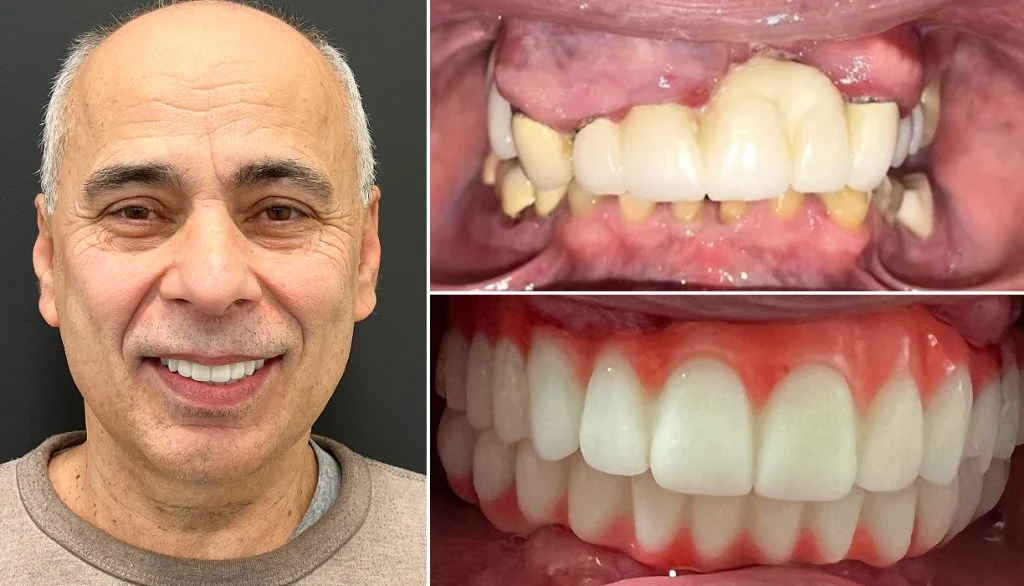
The Proof Is in Our Patients
Your Success Story Starts Here
Take This 60-Sec Quiz to See If Dental Implants are Right for You!
What Is an Impacted Tooth?
Be our Next Success Story!
689+
Smiles Restored
4
Convenient Locations
98%
Patient Satisfaction
10,000+
Implants Placed
30+ Years
Combined Experience
689+
Smiles Restored
4
Convenient Locations
98%
Patient Satisfaction
10,000+
Implants Placed
30+ Years
Combined Experience
689+
Smiles Restored
4
Convenient Locations
98%
Patient Satisfaction
10,000+
Implants Placed
30+ Years
Combined Experience
689+
Smiles Restored
4
Convenient Locations
98%
Patient Satisfaction
10,000+
Implants Placed
30+ Years
Combined Experience
689+
Smiles Restored
4
Convenient Locations
98%
Patient Satisfaction
10,000+
Implants Placed
30+ Years
Combined Experience
Comprehensive Tooth Solutions
Be our Next Success Story!
Solutions for Trapped Teeth
Resolution Awaits You
Impacted Tooth Solutions
Looking for Relief from Impacted Tooth Pain?
The Guide Will Show You
Fill Out the Form Below and You Will Receive a Text/Email With A Step-By-Step Guide to Extractions.
The Guide Will Show You
Frequently Asked Questions
Don't See Your Question Here?
Real Patients, Real Transformations
Your Success Story Starts Here
Take This 60-Sec Quiz to See If Dental Implants are Right for You!
Northern Virginia's Most Advanced Technology
Every piece of technology we use is chosen with one thing in mind: your comfort. These tools cut down treatment time, ease discomfort, and speed up healing , which is exactly why Northern Virginia patients keep trusting us with their care.
Flexible Payment Plans Available
NO Credit Score Impact Until Plan Selected.
Start Your Treatment Today With Easy Financing
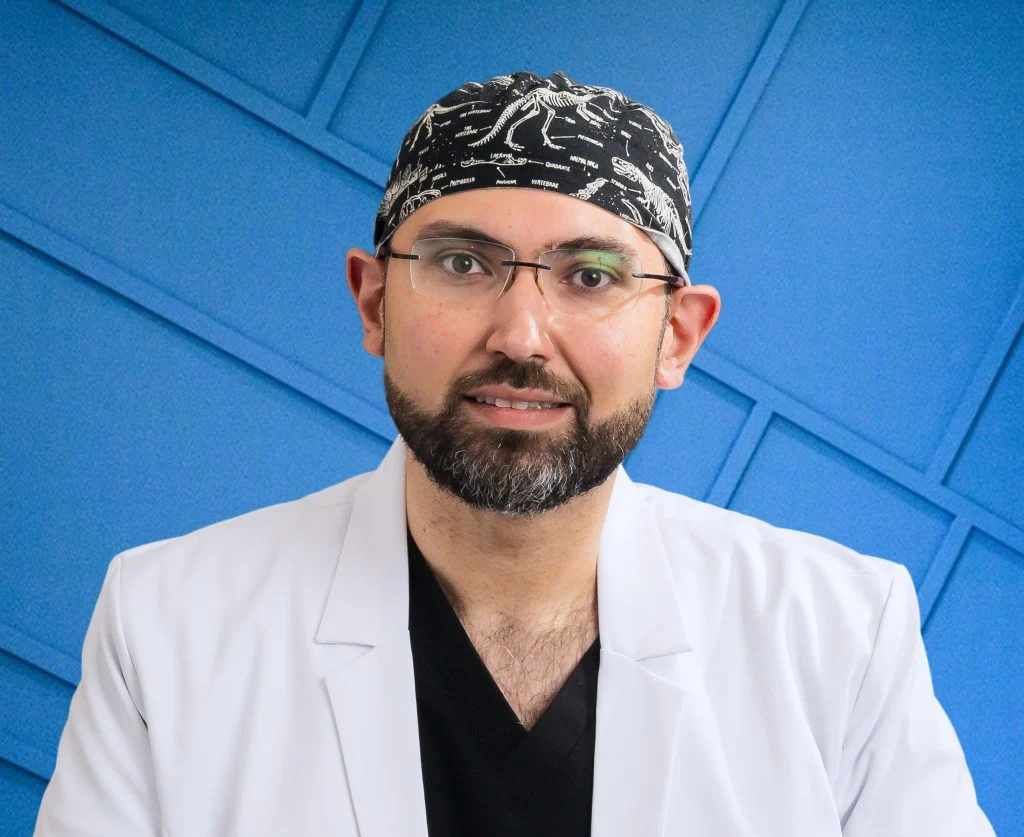
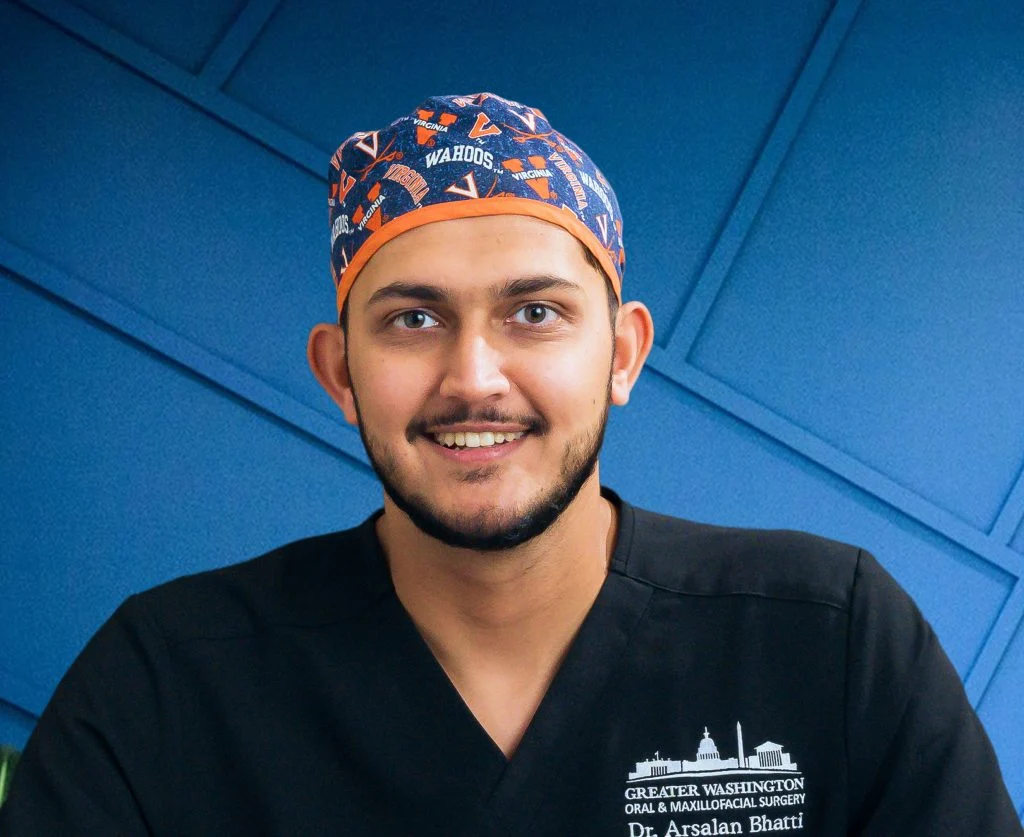
Your Smile Transformation Specialists
Lead Oral & Maxillofacial Surgeon
Oral & Maxillofacial Surgeon
Board-Certified Periodontist
Oral & Maxillofacial Surgeon
Be our Next Success Story!
Hundreds of Families Trust Their Smiles to Our Care
4.9★ out of 5
Convenient Locations
Find Your Nearest Location and Request An Appointment Today
Stay Informed, Smile With Confidence
Resolve Impacted Teeth with Specialized Surgical Care
A dull ache at the back of your jaw, swollen gums, or a tooth that never fully came in these are the signs that usually send people looking to remove wisdom teeth, often searching for a remove wisdom teeth dentist who can evaluate them properly. At Greater Washington Oral & Maxillofacial Surgery, our board-certified surgeons use advanced techniques and a full range of sedation options to keep the process safe and comfortable. Whether your wisdom teeth are erupted or impacted, our team guides you from consultation through recovery, including what to expect with cost, healing, and diet.
It’s the extraction of your third molars — last teeth to come in, usually somewhere between 17 and 25. Four of them typically, one per corner of the jaw. Here’s the catch though: jaws have gotten smaller over generations, so a lot of people just don’t have the room for these extra molars anymore.
About 90% of people end up with at least one impacted wisdom tooth, and roughly 85% of the people who develop them get told to have them out — often before anything even hurts, just as a way to head off infection, crowding, and decay before they start.
Not everyone needs this done though. Teeth that erupted fully, sit at a decent angle, and don’t mess with your bite or hygiene might just get monitored instead. But once they’re impacted or already causing trouble, removal turns into one of the most routine oral surgery procedures around — something like 5 million extractions happen every year in the U.S. Wisdom teeth get pulled more than just about any other elective dental procedure out there.
The Proof Is in Our Patients
Your Success Story Starts Here
Take This 60-Sec Quiz to See If Dental Implants are Right for You!
Be our Next Success Story!
Younger patients tend to have it easier — roots and bone are still developing, so the procedure’s usually simpler and healing’s faster. That said, age isn’t really a wall here; it can be done safely at almost any point with the right evaluation. And again — not everyone needs it. Fully erupted, well-aligned, easy to clean? Your surgeon might just want to keep watching it. Best way to actually know is a consultation with imaging.
Most people fall into candidate territory sometime late teens through mid-twenties, once there’s enough tooth development to actually see clearly on X-ray. You’re likely looking at removal if:
Pain, swelling, or tenderness keeps showing up near the back of your jaw
Your wisdom teeth are impacted or coming in at an angle
Cleaning around your back molars is a struggle, and cavities or gum irritation keep popping up
There are signs of infection — swollen gums, a bad taste that won't quit
Your other teeth are crowding or shifting
A dentist's already flagged it for preventive removal, symptoms or not
Technically, yes. Impacted wisdom teeth removal counts as oral surgery, though complexity swings a lot case to case. Fully erupted tooth, straightforward extraction — a general dentist can often handle that one. Impacted tooth buried in bone is a different story — that needs a surgical extraction, an incision, sometimes a bit of bone removed, done by an oral surgeon.
During your consultation, X-rays or 3D imaging show exactly where each tooth sits, and from there your surgeon figures out what anesthesia makes sense — local, nitrous, IV sedation, general, whatever fits the complexity. One tooth, usually 20 to 45 minutes. All four in one sitting, more like 45 minutes to an hour, longer if something’s a tough impaction. People ask does wisdom teeth hurt when removed constantly — and no, not during, you’re numbed or sedated the whole time. Afterward though, some soreness, swelling, light bleeding for a few days is normal, and manageable with the right aftercare.
Mostly comes down to how impacted the tooth is — that’s what drives how much surgical work needs to happen. Fully erupted, simple extraction — cheapest. Soft-tissue impaction, where it’s partially broken the gum, costs a bit more. Partial bony impaction, more still. Full bony impaction — tooth completely trapped in bone — that’s the most involved, and usually the priciest. The cost of removing wisdom teeth tends to work out better when all four come out together instead of spread across visits, especially since you’re not paying for anesthesia more than once.
Other things that shift the number: whether imaging’s needed, which sedation you pick, any medication after. Your surgeon’s team will put together a written estimate once your consultation and imaging are done, plus financing that fits your budget.
Frequently Asked Questions
Not during — you’re numbed or sedated. After, expect mild to moderate discomfort, swelling, some light bleeding for three or four days, manageable with pain medication.
Not all of them do. But without enough room to come in properly, they can cause impaction, infection, crowding, cysts, and damage to nearby teeth — which is why preventive removal happens so often.
If they’re not causing issues and erupted fully in a healthy spot, plenty of people just keep them. Left untreated though, impacted or partially erupted teeth can lead to repeat infections, cysts, and damage to nearby molars over time.
Still Have Questions?
A tooth stuck under the gums or bone can’t come in the way it’s supposed to; that’s an impacted tooth. Leave it alone long enough, and it can turn into pain, crowding, and damage to whatever teeth are nearby. At Greater Washington Oral & Maxillofacial Surgery, our board-certified surgeons treat impacted teeth in patients of all ages across Northern Virginia, and we lean on advanced imaging so treatment stays precise and as minimally invasive as it can be.
The Proof Is in Our Patients
Your Success Story Starts Here
Take This 60-Sec Quiz to See If Dental Implants are Right for You!
Basically, it’s a tooth that never made it into its proper spot in your mouth. Sometimes another tooth’s blocking the way, sometimes there’s just not enough room in the jaw, sometimes it’s angled wrong under the gum. Any tooth can technically get impacted, but in practice it’s almost always wisdom teeth or canines. Most people find out during a routine exam or X-ray — often before anything’s even started hurting.
689+
Smiles Restored
4
Convenient Locations
98%
Patient Satisfaction
10,000+
Implants Placed
30+ Years
Combined Experience
689+
Smiles Restored
4
Convenient Locations
98%
Patient Satisfaction
10,000+
Implants Placed
30+ Years
Combined Experience
689+
Smiles Restored
4
Convenient Locations
98%
Patient Satisfaction
10,000+
Implants Placed
30+ Years
Combined Experience
689+
Smiles Restored
4
Convenient Locations
98%
Patient Satisfaction
10,000+
Implants Placed
30+ Years
Combined Experience
689+
Smiles Restored
4
Convenient Locations
98%
Patient Satisfaction
10,000+
Implants Placed
30+ Years
Combined Experience
These come in last, and let’s be honest, most jaws just don’t have the room. No space to erupt properly means the tooth ends up impacted: angled against the tooth next to it, trapped under the gum, or buried entirely in bone. Wisdom teeth don’t really do anything for your bite, so the standard move is just taking them out. That prevents the pain, infection, and damage to nearby teeth before any of it becomes a problem.
Canines are a whole different situation. They matter for your bite, and for how the rest of your teeth line up, so extraction isn’t really on the table here. Instead, an impacted canine gets an exposure and bonding procedure, with your oral surgeon and orthodontist working together on it. Braces go on first, opening up room in the arch. Then the surgeon exposes the tooth and attaches a small bracket and chain, and from there the orthodontist takes over, slowly pulling the tooth into where it needs to sit.
Be our Next Success Story!
These are some points that make us different from others:
Board-Certified Oral and Maxillofacial Surgeons
planning from day one:(overdenture):
Every case is handled by surgeons who carry board certification and years of hands-on experience with impacted teeth of every kind, from straightforward cases to more complex surgical extractions. This level of expertise means patients can feel confident they're in capable hands, regardless of how complicated their situation might be.
Close Coordination with Orthodontists
Impacted canine cases often require a team approach, and that's where close coordination with orthodontists makes a real difference. By working hand-in-hand with a patient's orthodontist, the surgical team can align treatment plans, ensuring the tooth is exposed and guided into place in a way that supports the broader orthodontic goals.
Four Northern Virginia Locations
Convenience shouldn't be an afterthought when it comes to care, and having four locations across Northern Virginia means quality treatment is never far from home. This accessibility makes it easier to schedule appointments, attend follow-ups, and get the ongoing care needed without long drives or added stress.
Advanced Imaging with 3D Cone Beam CT:
:
Accurate diagnosis starts with a clear picture, and that's exactly what advanced imaging technology like 3D Cone Beam CT provides. Unlike traditional X-rays, this technology offers a detailed, three-dimensional view of the tooth's position, allowing the surgical team to plan treatment with precision and avoid surprises during the procedure.
Multiple Sedation Options for Patients of Any Age
Comfort matters, especially for younger patients or those with dental anxiety. Offering multiple sedation options means care can be tailored to each patient's needs, whether that's a child having a first surgical experience or an adult who simply prefers to be fully relaxed throughout the procedure.
Frequently Asked Questions
Left alone, it can lead to pain, infection, cysts, crowding, or damage to the roots of nearby teeth. And the longer it sits impacted, the more the roots can develop and fuse with the surrounding bone, which just makes treatment harder to deal with later.
Most people just deal with mild discomfort and some swelling afterward; pain medication and a soft diet for a few days usually takes care of it. During the actual procedure, we’ve got multiple sedation options to keep you comfortable.
After the exposure and bonding, it typically takes several months of orthodontic work to get the tooth into its final position. Your orthodontist checks progress along the way at regular follow-ups.
Still Have Questions?
Real Patients, Real Transformations
Your Success Story Starts Here
Take This 60-Sec Quiz to See If Dental Implants are Right for You!
Northern Virginia's Most Advanced Technology
Every piece of technology we use is chosen with one thing in mind: your comfort. These tools cut down treatment time, ease discomfort, and speed up healing , which is exactly why Northern Virginia patients keep trusting us with their care.
Flexible Payment Plans Available
NO Credit Score Impact Until Plan Selected.
Start Your Treatment Today With Easy Financing
Your Smile Transformation Specialists
Lead Oral & Maxillofacial Surgeon
Oral & Maxillofacial Surgeon
Board-Certified Periodontist
Oral & Maxillofacial Surgeon
Be our Next Success Story!
Convenient Locations
Find Your Nearest Location and Request An Appointment Today
Hundreds of Families Trust Their Smiles to Our Care
4.9★ out of 5
Stay Informed, Smile With Confidence
Fredericksburg Office
Fredericksburg, VA
Fairfax Office
Fairfax, VA
Manassas Office
Manassas, VA
Stafford Office
Stafford, VA
Search for services, dental procedures, and expert tips from our patient resources.
Popular searches: Dental Implants, Cleanings, Insurance.
[DEMO] Lorem ipsum dolor sit amet
[DEMO] Lorem ipsum dolor sit amet
[DEMO] Lorem ipsum dolor sit amet