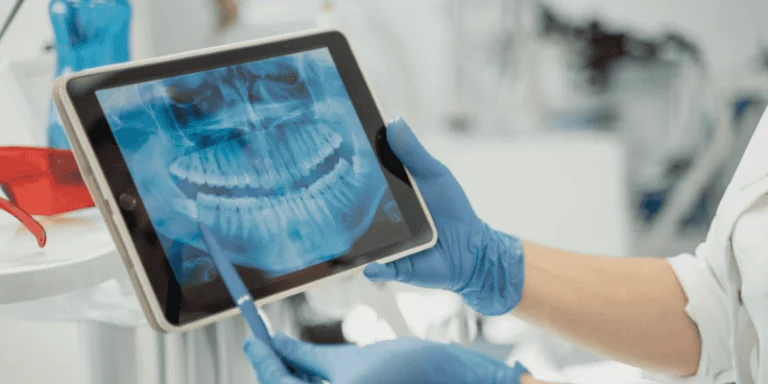


Dental implants are one of the best ways to replace missing teeth. Many people wonder if they will need to replace their implants after a few years or if they can count on them for the long term.
With proper care, dental implants can last 20 years or more, and in many cases, they can last a lifetime. The titanium post that gets placed in your jawbone is designed to become a permanent part of your mouth.
However, the crown attached to the implant may need replacement after 10 to 15 years due to normal wear.
Understanding what affects how long your implants will last can help you protect your investment. Your daily habits, overall health, and how well you care for your implants all play a role in their lifespan.
This guide will walk you through the real factors that determine how long dental implants truly last and what you can do to make them last as long as possible.
Key Takeaways
- Dental implants can last 20 years or longer with proper care and good oral hygiene
- Your lifestyle habits like smoking and teeth grinding can shorten the lifespan of your implants
- Regular dental checkups help catch problems early and prevent implant failure
Schedule a Dental Implant Longevity Consultation in Fairfax, Manassas, Stafford, or Fredericksburg
Expected Lifespan of Dental Implants
Dental implants typically last 15 years or longer, with many remaining functional for decades when properly maintained. The implant post and crown have different lifespans, and understanding these differences helps you set realistic expectations for your tooth replacement.
Typical Duration of Implant Posts and Crowns
The implant post that sits in your jawbone is designed to be permanent. Studies show that dental implants have a 90 to 95 percent success rate over 10 years.
Most posts remain stable for decades or even your entire lifetime once they bond with your jawbone. The crown attached to your implant post wears down faster than the post itself.
About 50 to 80 percent of crowns need replacement within 15 to 20 years due to normal wear and tear. This doesn’t mean your implant failed.
It just means the visible tooth part needs updating while the post stays in place. Your daily habits affect how long your crown lasts.
Grinding your teeth, chewing ice, or biting hard objects can shorten crown lifespan. Regular dental checkups help catch crown problems early before they affect the implant post underneath.
How Implant Survival Rates Are Measured
Dentists track implant survival rates by monitoring how many implants remain functional over specific time periods. Researchers follow patients for years after implant placement to collect this data.
They look at whether the implant stays in place, functions normally, and doesn’t cause pain or infection. Key factors measured include:
- Whether the implant bonds properly with your jawbone
- Absence of movement or loosening
- No signs of infection around the implant
- Healthy bone and gum tissue surrounding the implant
The average lifespan of dental implants is more than 15 years, with most lasting decades with proper care. Failure rates are relatively low.
Research shows implant failure occurs in about 5 percent of nonsmokers compared to 11 percent in smokers.
Dental Implants Versus Other Tooth Replacement Options
Dental implants outlast other options for replacing missing teeth. Bridges typically last 10 to 15 years before needing replacement.
Traditional dentures last 5 to 10 years and often require adjustments as your jawbone changes shape over time.
Comparison of tooth replacement longevity:
| Option | Expected Lifespan | Requires Bone Support |
| Dental Implants | 15+ years to lifetime | Yes |
| Bridges | 10-15 years | No |
| Dentures | 5-10 years | No |
Implants protect your jawbone from shrinking because they replace the tooth root. Bridges and dentures sit on top of your gums without stimulating bone growth.
This means implants provide better long-term support for your facial structure while other options may require adjustments as bone loss occurs.
Protect Your Dental Implants for Life: Visit Our Northern Virginia Specialists
Core Factors Influencing Longevity
The lifespan of your dental implant depends on biological processes and material choices that work together from day one. Your jawbone structure, daily cleaning habits, how well the implant fuses with bone, and the materials used all play specific roles in determining whether your implant lasts 10 years or a lifetime.
Jawbone Quality and Bone Density
Your jawbone serves as the foundation for your implant. Without adequate bone density and quality, the implant post cannot anchor properly.
Dentists classify bone quality on a scale from D1 to D4. D1 represents dense, strong bone that provides excellent support.
Bone resorption starts immediately after tooth loss. Your jawbone needs stimulation from tooth roots to maintain its volume.
Without that stimulation, the bone shrinks and weakens over time. This makes timing crucial.
Placing an implant within 3-6 months of tooth extraction helps preserve bone density. If you’ve already experienced significant bone loss, bone grafting can rebuild the necessary foundation before implant placement.
Oral Hygiene and Gum Health
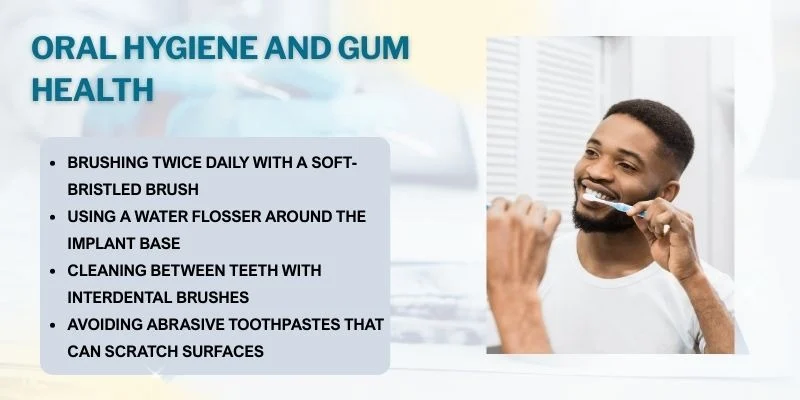
Your daily cleaning routine directly impacts how long your implant survives. The implant post itself cannot decay, but the surrounding gum and bone tissue remain vulnerable to bacterial infection.
Peri-implantitis causes most late-stage implant failures. This inflammatory condition resembles gum disease and destroys the bone supporting your implant.
Unlike natural teeth, implants lack a periodontal ligament that helps protect against bacteria. Essential daily care includes:
- Brushing twice daily with a soft-bristled brush
- Using a water flosser around the implant base
- Cleaning between teeth with interdental brushes
- Avoiding abrasive toothpastes that can scratch surfaces
Professional cleanings every 3-6 months catch early problems before they become serious. Patients who maintain rigorous hygiene see survival rates of 98% or higher after 15 years, while those who skip regular care drop to 85% after just 10 years.
Osseointegration Process
Osseointegration describes how your jawbone fuses directly with the titanium implant post. This biological process typically takes 3-6 months and determines whether your implant becomes permanently stable.
During this healing period, bone cells grow onto the implant surface and create a solid bond. Any disruption to this process can cause the implant to fail before it ever gets a chance to function properly.
Several factors affect successful osseointegration. Smoking restricts blood flow and starves the area of oxygen needed for healing.
Uncontrolled diabetes slows bone formation and increases infection risk. Even excessive force on the implant during healing can prevent proper fusion.
Your surgeon will provide specific instructions about what to eat and avoid during this critical window. Following these guidelines protects the osseointegration process and gives your implant the best chance at long-term success.
Implant Material and Design
Modern implants use titanium or zirconia as the primary implant material. Titanium has decades of research supporting its biocompatibility and strength.
Your body accepts it readily, which promotes better osseointegration. The implant post surface texture also matters.
Roughened surfaces provide more area for bone cells to attach, creating a stronger bond. Smooth surfaces may look appealing but actually achieve poorer integration with bone.
Thread design affects how forces distribute through your jawbone. Different thread patterns suit different bone densities and loading conditions.
Your surgeon selects the specific design based on your unique anatomy. Quality matters significantly.
Manufacturing standards and material purity directly influence durability. Premium implants from established manufacturers undergo rigorous testing and quality control that budget options may skip.
Maximize Your Dental Implant Lifespan With Expert Care
Impact of Health, Habits, and Lifestyle
Your overall health and daily habits play a major role in how well your implants hold up over time. Conditions like diabetes, habits like smoking, and even grinding your teeth at night can all affect how long your implants stay healthy and functional.
Systemic Health Conditions and Medications
Certain health problems can make it harder for your body to heal after implant surgery. Diabetes is one of the biggest concerns because high blood sugar slows down healing and makes infections more likely.
If you have diabetes, keeping your blood sugar under control helps your implants fuse properly with your jawbone. Autoimmune diseases can also create challenges.
Conditions like rheumatoid arthritis or lupus may affect how your immune system responds to the implant. Some medications impact implant success too.
Blood thinners, steroids, and drugs for osteoporosis can all affect bone density and healing. Bisphosphonates, which are often prescribed for bone health, can sometimes lead to problems with your jawbone.
You should tell your dentist about all medications you take before getting implants.
Teeth Grinding and Night Guard Use
Grinding your teeth puts extra pressure on your implants. This habit, called bruxism, can wear down the crown or even damage the implant itself over time.
Many people grind their teeth at night without realizing it. A night guard protects your implants from this constant force.
Your dentist can make a custom guard that fits your mouth perfectly. Wearing it every night helps your implants last much longer.
Signs you might grind your teeth include jaw pain, headaches when you wake up, or worn-down teeth. If you notice these symptoms, ask your dentist about getting a night guard.
Smoking, Alcohol, and Diet
Smoking significantly reduces implant success rates. It restricts blood flow to your gums, which slows healing and increases your risk of implant failure.
Smokers are two to three times more likely to experience problems with their implants. Heavy alcohol use also interferes with healing.
It weakens your immune system and can lead to poor bone quality around the implant. Your diet matters for implant health too.
Foods high in sugar promote bacteria growth, which can lead to gum infections around your implants. Eating foods rich in calcium and vitamin D supports strong bones.
Crunchy vegetables help keep your mouth clean, while acidic foods and drinks can harm your gums if consumed too often. Good oral hygiene combined with healthy eating gives your implants the best chance to last for decades.
Dental Implant Procedure and Professional Care
The success of your dental implant starts with proper surgical technique and continues with expert care throughout the healing process. Skilled placement and necessary bone preparation create the foundation for implants that can last decades.
Steps of a Successful Dental Implant Procedure
Your dental implant procedure typically happens in several stages over a few months. First, your dentist performs a detailed exam with X-rays or 3D imaging to check your bone quality and plan the exact placement.
During implant surgery, your dentist makes a small opening in your gum and carefully drills into the jawbone. They then place the titanium implant post into this prepared site at a precise angle and depth.
The implant must be positioned correctly to avoid stress on the bone. After placement, your gum tissue is stitched closed over or around the implant.
You’ll need 3-6 months for osseointegration, where your bone fuses with the titanium post. Once healed, your dentist attaches an abutment (connector piece) and then your final crown.
Key Timeline:
- Initial surgery: 1-2 hours
- Healing period: 3-6 months
- Abutment placement: 1 visit
- Crown placement: 1-2 visits
Role of Surgical Expertise in Long-Term Outcomes
The skill of your implant surgeon directly affects how long your implant will last. Experienced surgeons who have placed over 500 implants achieve success rates of 98-99%, while less experienced clinicians see rates closer to 92-94%.
An expert surgeon uses advanced planning tools and proper technique to place your implant at the ideal angle and depth. Even small placement errors can create stress that leads to bone loss or complications years later.
Your surgeon should also manage your soft tissue carefully to ensure healthy gums around the implant. Look for a dentist with specialized training in implantology, board certifications, or membership in organizations like the American Academy of Implant Dentistry.
Ask about their experience level and complication rates before choosing your provider.
Bone Grafting and Bone Restoration Procedures
If you don’t have enough bone to support an implant, bone grafting can rebuild the necessary foundation. This procedure adds bone material to areas where your natural bone has deteriorated after tooth loss.
During a bone graft, your dentist places bone material (from your own body, a donor, or synthetic sources) into the weak area. The graft acts as a scaffold that your natural bone grows into over 4-6 months.
Once healed, you’ll have sufficient bone quality and volume for implant placement. Common grafting procedures include:
- Socket preservation: Done immediately after tooth extraction to maintain bone
- Ridge augmentation: Rebuilds width of the jawbone
- Sinus lift: Adds bone to the upper jaw near molars
Your bone quality significantly impacts implant success, so don’t skip grafting if your dentist recommends it.
Maintenance, Monitoring, and Preventing Complications
Keeping your dental implants healthy requires daily cleaning habits and regular professional visits. Early detection of problems like peri-implantitis can prevent serious complications that threaten implant survival.
Daily Cleaning and Oral Care Practices
Your oral hygiene routine determines whether your implants stay healthy for decades. Brush twice daily with a soft-bristled toothbrush, paying extra attention to where the implant crown meets your gum tissue.
Regular flossing removes food particles and bacteria from hard-to-reach spaces. Interdental brushes and water flossers are effective tools for cleaning around implant-supported crowns and bridges.
Water flossers with chlorhexidine can reduce inflammation around implants. Complex implant restorations create areas that standard toothbrushes cannot reach.
You may need specialized tools to eliminate bacteria from spaces under prosthetic teeth with large sections between implants. Poor plaque control directly increases your risk of developing peri-implantitis.
Daily cleaning prevents the buildup of harmful bacteria that cause inflammation and bone loss around your implants.
Regular Dental Check-Ups and Professional Monitoring
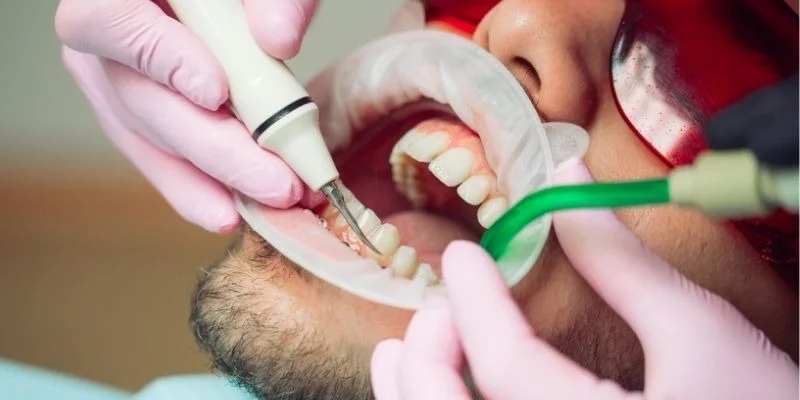
Professional maintenance visits are essential for catching problems before they become serious. Patients who attend regular maintenance therapy have an 18% incidence of peri-implantitis compared to 44% without professional care over five years.
Your dentist will check for inflammation in the soft tissues surrounding your implants. They measure probing depths, assess plaque and calculus buildup, and take periodic X-rays to monitor bone levels.
Professional cleaning with glycine powder air-polishing and ultrasonic devices reduces inflammation more effectively than traditional curette instruments. These methods safely remove biofilm without damaging the implant surface.
Your dental team provides education on proper oral health techniques specific to your implant restoration. They can identify whether your prosthesis has hygienic contours that allow you to clean it effectively at home.
Dealing With Peri-Implantitis and Implant Failure
Peri-implantitis affects the soft tissue and causes progressive bone loss around your implant. This condition shares similarities with gum disease and can lead to complete implant failure if left untreated.
The main treatment goals for peri-implantitis include managing inflammation, preventing further bone loss, and maintaining healthy conditions around the implant. Early treatment significantly improves outcomes.
Risk factors include a history of gum disease, poor plaque control, and skipping maintenance appointments. Patients who do not follow recommended maintenance need more peri-implantitis treatment over ten years (41%) compared to those who attend regular visits (27%).
Treatment options range from non-surgical debridement with specialized instruments to surgical procedures for advanced cases. Your dentist may recommend antibacterial rinses or medications as part of your treatment plan.
Common Causes and Early Signs of Implant Failure
Implant failure happens when the bone doesn’t bond properly with the implant, when infection develops around the gum tissue, or when too much pressure damages the implant structure. Catching these problems early can save your implant and prevent more serious complications.
Poor Osseointegration and Bone Loss
Osseointegration is when your jawbone grows around and fuses with the implant. When this process fails, your implant won’t have a stable foundation.
This usually happens in the first few months after surgery. Several factors can prevent proper bone integration.
If the bone overheats during drilling, it can die and won’t bond with the implant. Poor bone quality or insufficient bone volume also makes it harder for osseointegration to succeed.
Medical conditions like uncontrolled diabetes can slow down healing and affect how well bone grows around the implant. You might notice the implant feels loose or moves slightly when you touch it.
Pain that gets worse instead of better is another warning sign. Bone resorption shows up on X-rays as dark areas around the implant threads where bone should be present.
Smoking significantly reduces blood flow to your jawbone, which makes it much harder for new bone to form. Your dentist can check implant stability with special measurements during follow-up visits.
Gum Disease and Peri-Implantitis
Peri-implantitis is an infection that attacks the gum tissue and bone around your dental implant. It works like gum disease but progresses faster and can destroy the bone supporting your implant.
Bacteria build up when you don’t clean around the implant properly. The infection causes inflammation that breaks down the gum attachment and eventually reaches the bone.
People who had gum disease before getting implants face higher risks of developing peri-implantitis.
Early warning signs include:
- Red or swollen gums around the implant
- Bleeding when you brush or floss
- Bad taste in your mouth near the implant
- Pus or discharge around the gum line
- Deep pockets forming between the gum and implant
Persistent pain or swelling that doesn’t improve means you should contact your dentist right away. Regular professional cleanings help prevent bacteria from building up.
Using interdental brushes designed for implants makes home care more effective at protecting your jawbone health.
Mechanical Overload and Implant Instability
Too much pressure on your implant can cause it to fail even when osseointegration was successful. This happens when the forces on your implant exceed what the bone can handle.
Grinding or clenching your teeth puts extreme stress on implants. Poor bite alignment can also concentrate too much force on one implant instead of spreading it evenly.
Implants placed in softer bone areas are more vulnerable to mechanical problems. Your implant might feel uncomfortable when you bite down on food.
You may hear clicking sounds or notice the crown feels loose. Pain during chewing often means the implant is experiencing too much load.
A nightguard protects your implants if you grind your teeth while sleeping. Your dentist should check your bite regularly to make sure forces are balanced.
Properly designed restorations distribute pressure evenly across multiple implants in full-arch cases. Catching instability early prevents complete implant failure and bone loss.
Frequently Asked Questions
Dental implants raise many questions about success rates over decades, potential drawbacks, age considerations, material durability, influencing factors, and healing timelines. These common concerns help you make informed decisions about your dental health.
What are the common success rates for dental implants after 20 years?
Dental implants show strong long-term performance when properly maintained. Clinical research consistently points to a 95-98% success rate over a 10-year period, and many implants continue functioning well beyond that timeframe.
After 20 years, success rates typically range from 90-95% for patients who maintain good oral hygiene and attend regular dental checkups. The exact percentage depends on multiple factors including your oral care routine, overall health, and whether you smoke.
Implants in the lower jaw generally perform slightly better than those in the upper jaw due to bone density differences.
What are the disadvantages associated with getting dental implants?
The most significant drawback is cost, as dental implants represent a substantial financial investment that insurance often doesn’t fully cover. The procedure also requires surgery, which carries standard surgical risks like infection, nerve damage, or sinus problems in upper jaw placements.
Treatment takes considerable time, typically spanning several months from initial placement to final restoration. You’ll need multiple appointments and a healing period between stages.
Some patients lack sufficient jawbone and require bone grafting procedures before implant placement, adding time and expense. Complications like peri-implantitis can develop if you don’t maintain proper care.
This inflammatory condition affects the gum and bone around the implant and can lead to implant failure if left untreated.
Is it advisable to get dental implants at the age of 25?
Getting dental implants at 25 is generally safe and effective, provided your jawbone has finished growing. Most people complete jaw development by age 18-21, making 25 a suitable age for implant placement.
Young adults often make excellent candidates because they typically have good bone density and healing capacity. Starting with implants early means you can enjoy their benefits for many decades.
You should consider the long-term commitment required. Implants need lifelong maintenance and care, so you must be prepared to maintain excellent oral hygiene habits.
Your dentist will evaluate your specific situation, including bone quality, oral health, and the reason for tooth loss. If tooth loss resulted from trauma or a congenital condition, implants offer an excellent solution that prevents bone loss and maintains facial structure.
On average, how long do titanium dental implants typically last?
Titanium dental implants can last 10-30 years or even a lifetime if properly cared for. The titanium post itself rarely fails because titanium is highly durable and biocompatible with human bone.
Most implant failures occur due to issues with the surrounding tissue rather than the titanium post breaking down. When patients follow proper oral hygiene and attend regular dental visits, titanium implants routinely function for 25-30 years or longer.
The crown attached to the implant typically needs replacement every 10-15 years due to normal wear. The titanium post usually remains intact and can support a new crown without additional surgery.
Your individual results depend on factors like oral hygiene, smoking status, overall health, and how much force your implant experiences during chewing.
What factors can significantly influence the lifespan of a dental implant?
Oral hygiene stands as the most important factor affecting your implant’s lifespan. Poor cleaning allows bacteria to accumulate, leading to peri-implantitis that destroys the supporting bone.
Smoking dramatically reduces implant success rates, with failure rates reaching 20-25% in heavy smokers compared to just 3-5% in non-smokers. Tobacco restricts blood flow and impairs healing around the implant site.
Your jawbone quality and quantity directly impact how well the implant integrates. Dense, healthy bone provides better support than soft or insufficient bone tissue.
Systemic health conditions like diabetes, osteoporosis, and autoimmune disorders affect healing and bone metabolism. Patients with controlled conditions demonstrate implant success rates around 95%, while poorly managed conditions can drop success rates to 80-85%.
The surgeon’s experience and placement technique matter significantly. Experienced clinicians achieve success rates of 98-99%, while less experienced providers see rates closer to 92-94%.
Regular dental checkups allow early detection of problems before they become serious. Professional cleanings every 3-6 months help maintain healthy tissue around your implant.
How much time does it generally take for dental implants to fully heal after the procedure?
Complete healing typically takes 3-6 months, though this varies based on individual factors and which jaw receives the implant.
Lower jaw implants often heal faster, usually within 3-4 months. Upper jaw implants may require 5-6 months.
The initial surgical site heals within 1-2 weeks. Full osseointegration takes much longer.
Osseointegration is the process where your jawbone fuses with the titanium implant post, creating a stable foundation.
During the first few weeks, you’ll experience some swelling and discomfort that gradually subsides. Most patients return to normal activities within a few days.
You should avoid hard foods during the healing period.
Your dentist monitors healing progress through checkup appointments. They may use X-rays to assess bone integration.
Factors like age, overall health, smoking, and bone quality affect healing speed. Younger patients with good health generally heal faster than older patients or those with health conditions that slow tissue repair.