
Many people worry that they’ll need bone grafting before getting dental implants, which can add months to treatment time and increase costs.
The good news is that dental implants without bone grafting is possible if you have sufficient natural bone density or if your dentist uses specialized implant techniques designed for patients with bone loss.
Understanding when this is possible can help you make informed decisions about your tooth replacement options.
Modern dental technology has made it easier than ever to get implants without the extra step of bone grafting.
If you have adequate jawbone volume where your missing tooth once was, or if you’re a candidate for advanced implant techniques like zygomatic or pterygoid implants, you might be able to skip bone grafting entirely.
Your specific situation depends on factors like how long you’ve been missing teeth, your overall oral health, and the location of the implant.
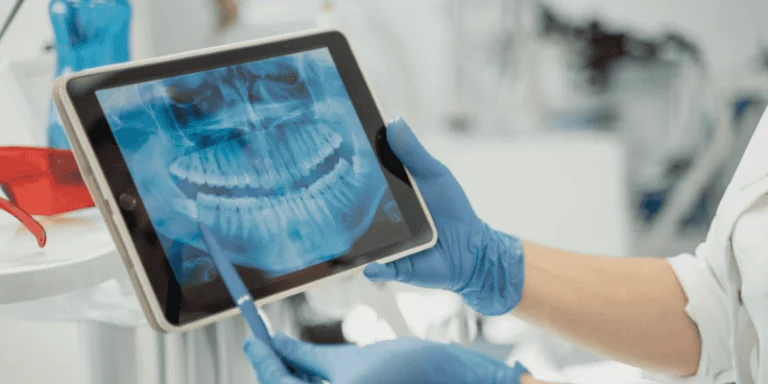
The key to knowing whether you need bone grafting is getting a thorough evaluation from an experienced implant dentist. They’ll use 3D imaging to assess your jawbone and determine which approach works best for your needs.
Key Takeaways
- You can get dental implants without bone grafting if you have enough natural bone or qualify for specialized implant techniques
- Alternative options like All-on-4, zygomatic implants, and short implants help patients with limited bone avoid grafting procedures
- A comprehensive consultation with an implant dentist using 3D imaging is essential to determine your best treatment path
When Dental Implants Can Be Done Without Bone Grafting
Getting dental implants without bone graft is possible when you have enough healthy jawbone to support the implant. Your bone density and quality determine whether you can skip the grafting procedure and move straight to implant placement.
Understanding Jawbone Density and Quality
Your jawbone needs specific characteristics to hold a dental implant securely. Density refers to how compact and strong your bone is, while quality measures its structural integrity.
Dentists measure bone density using a scale from D1 to D4. D1 bone is the densest and provides the best support for implants. D2 and D3 are moderate densities that still work well for most dental implants. D4 bone is the softest and may require additional planning or techniques.
Your jawbone also needs adequate height and width. Standard dental implants typically require at least 10mm of bone height and 6mm of width. The bone must be thick enough to surround the implant completely for proper osseointegration, which is when the titanium post fuses with your bone.
The front part of your lower jaw usually has the densest bone. Your upper jaw tends to be softer and may lose bone faster after tooth loss. The location of your missing tooth affects whether you have sufficient bone density for implants.
Signs of Sufficient Bone for Implant Success
Your dentist will use 3D imaging or CT scans to evaluate your jawbone condition before recommending implants. These scans show the exact amount of bone available and its quality.
Key indicators you have enough bone include:
- Recent tooth loss with minimal time for bone deterioration
- No history of gum disease or infection in the implant area
- Thick, firm gums that indicate healthy underlying bone
- Young to middle age when bone typically maintains better density
Your implant eligibility improves if you lost your tooth due to injury rather than decay or infection. Infections often damage surrounding bone tissue. People who wore dentures for many years may have experienced significant bone loss and might need grafting.
Good overall health also supports implant success rates. Conditions like diabetes or osteoporosis can affect bone quality and healing. Your dentist will review your medical history to assess your specific situation.
Risks of Proceeding Without Bone Graft
Placing dental implants in insufficient bone density increases the chance of implant failure. The implant may not integrate properly with your jawbone or could become loose over time.
Potential complications include:
- Poor stability causing the implant to shift or fall out
- Damage to nearby nerves or sinuses during placement
- Longer healing times with uncertain outcomes
- Need for implant removal and bone grafting later
Implant failure rates rise significantly when bone volume is inadequate. A failed implant means you’ll need removal, healing time, and possibly a more complex procedure with grafting. This costs more money and extends your treatment timeline.
Your implant could also place pressure on thin bone and cause it to break during placement. Advanced implant techniques like zygomatic or short implants may work better if your bone is borderline. A thorough evaluation helps you avoid these risks and choose the safest approach for your situation.
Wondering if you can get dental implants without bone grafting? Visit our clinic to receive a detailed bone assessment and expert treatment recommendations.
Alternative Implant Techniques for Limited Bone
Modern dental technology offers several specialized implant options that work with your existing bone structure. These alternative implant techniques use strategic placement and unique designs to avoid the need for bone grafting procedures.
Zygomatic Implants Overview
Zygomatic implants anchor directly into your cheekbone rather than your jawbone. These specialized implants can reach up to 55mm in length, making them much longer than standard implants.
Your cheekbone provides a dense, stable foundation that never shrinks or deteriorates like jaw bone can. This makes zygomatic implants ideal if you have severe bone loss in your upper jaw. The procedure allows you to receive fixed teeth without waiting months for a bone graft to heal.
Key benefits include:
- Success rates over 90% at 10 years
- Immediate tooth placement in many cases
- Solution for patients previously told implants weren’t possible
- No need for sinus lift procedures
Pterygoid implants work similarly by anchoring into the pterygoid plate at the back of your upper jaw. These dental implants without bone graft requirements give you options even with significant bone loss.
Shorter and Mini Dental Implants
Shorter implants measure 8mm or less in length but maintain a normal width. These implants feature improved surface designs that maximize contact with your available bone. You can receive them in areas with limited vertical bone height without risking damage to nerves or sinuses.
Mini dental implants have a much smaller diameter of less than 3mm. These single-piece implants require less bone and involve a simpler surgical process. Mini implants work especially well for stabilizing loose lower dentures, dramatically improving your ability to eat and speak comfortably.
Studies show that shorter implants have success rates comparable to conventional implants. Your dentist can use them for single tooth replacement in areas where your bone ridge is narrow.
Angled Implants for Stability
Angled implants tilt at strategic angles to maximize contact with your densest available bone. The All-on-4 technique uses just four implants placed at specific angles to support a full arch of teeth. By tilting the back implants, your dentist avoids areas where bone is weakest.
The All-on-6 approach uses six implants for additional support when needed. Both methods let you receive dental implants without extensive procedures like grafting in the back of your jaw.
You can often get provisional teeth attached the same day as your surgery. This means you walk out with a functional smile immediately rather than waiting months for healing.
All-on-4 and Immediate Load Implant Options
When you need full-arch tooth replacement, All-on-4 implants and immediate load options provide faster solutions that often avoid bone grafting. These approaches use strategic implant placement and advanced techniques to work with your existing bone structure.
How All-on-4 Dental Implants Work
All-on-4 dental implants use just four strategically placed implants to support an entire arch of replacement teeth. Two implants are placed vertically in the front of your jaw, while two are angled in the back areas.
The angled placement is what makes this approach special. By tilting the back implants, your dentist can anchor them into denser bone areas and avoid spots where bone loss has occurred. This means you can often get this dental restoration without needing a bone graft first.
The All-on-4 technique maximizes your existing bone structure instead of requiring additional bone material. This works well if you have some bone loss but still have enough healthy bone in the front part of your jaw. Your dentist will use 3D imaging to check if you’re a good candidate for this tooth replacement option.
Immediate Load and Same-Day Implants
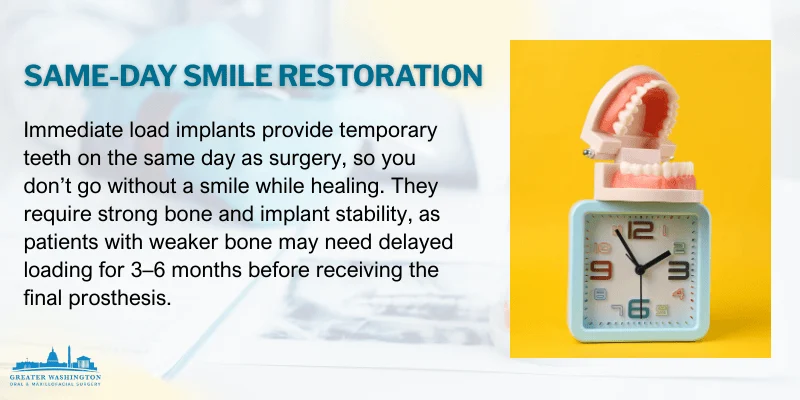
Immediate load implants let you receive temporary replacement teeth on the same day as your implant surgery. This means you won’t have to go without teeth while your implants heal.
With immediate loading, your dentist attaches a prosthesis right after placing the implants. This works when you have good bone density and stability at the implant sites. You’ll wear these temporary teeth for several months while your bone fuses with the implants.
Not everyone qualifies for same-day implants. Your bone quality needs to be strong enough to support immediate pressure from chewing. If your bone is weaker, delayed loading might be better, where you wait 3 to 6 months before getting your prosthesis.
Implant-Supported Dentures as Alternatives
Implant-supported dentures combine the stability of dental implants with the coverage of dentures. These tooth replacement options use fewer implants than individual tooth replacements, making them more affordable.
You can choose between fixed or removable versions. Fixed implant-supported dentures stay permanently attached to your implants, while removable ones snap onto the implants but you can take them out for cleaning. Both options provide better stability than traditional dentures that just rest on your gums.
These alternatives often work well if you want full-arch tooth replacement without extensive surgery. They typically need less bone volume than traditional implants, which can help you avoid bone grafting procedures.
Additional Procedures to Avoid Bone Grafting
Some dental procedures can reshape or work around existing bone structures to create enough space for implants. These methods can help you skip traditional bone grafting while still getting stable implants.
Ridge Expansion Methods
Ridge expansion works by widening your jawbone instead of adding new bone material. Your dentist makes a small cut along the top of your narrow bone ridge and gently stretches it apart using special tools. This creates a wider space where the implant can fit securely.
The procedure works best when you have adequate bone height but not enough width. Your dentist places the implant right after expanding the ridge, so you don’t need multiple surgeries. Some bone graft material might be added to fill small gaps, but it’s much less than a full grafting procedure would require.
Benefits of ridge expansion include:
- Single surgery instead of waiting months between procedures
- Uses your own existing bone structure
- Lower cost than traditional bone grafting
- Faster overall treatment time
This ridge expansion method typically heals in a few months, which is shorter than waiting for a bone graft to fully integrate.
Sinus Lift Alternatives
When you need upper back teeth replaced, the sinus cavity can limit where implants go. Instead of lifting the sinus floor with bone grafting, your dentist might use specialized implants that avoid this area completely.
Zygomatic implants anchor into your cheekbone rather than your upper jaw. These longer implants bypass the sinus entirely and provide stable support for your new teeth. Pterygoid implants attach to dense bone at the back of your upper jaw, behind the sinus cavity.
Another option is angled implants that tilt away from the sinus. The All-on-4 technique uses this approach with just four strategically placed implants.
You can often get temporary teeth attached the same day as your surgery, which means you won’t need to wait months wearing dentures like you would with traditional dental implants vs dentures approaches.
Speak with an implant specialist today to explore advanced solutions like All-on-4 or zygomatic implants that may eliminate the need for grafting.
Benefits and Considerations of Skipping Bone Grafting
Choosing dental implants without bone grafting can cut months from your treatment timeline and reduce costs. However, you need to understand both the advantages and potential risks before making this decision.
Reduced Recovery Time and Discomfort
When you skip bone grafting, you eliminate an entire surgical procedure from your treatment plan. A bone graft typically requires 3-6 months of healing before implant placement can begin, which means you could be waiting half a year or more for your final teeth.
Without this step, your recovery time drops significantly. You’ll experience less overall discomfort since you’re avoiding the additional surgery and healing process associated with grafting.
Many patients who qualify for graftless implants can receive their new teeth much faster, sometimes even on the same day with techniques like All-on-4.
The healing process becomes more straightforward when you’re only recovering from one procedure instead of two. You won’t need to worry about the grafted bone integrating properly before moving forward, which removes a potential point of failure from your treatment.
Cost Effectiveness and Fewer Appointments
Getting an affordable dental implant solution becomes more realistic when bone grafting isn’t required. Bone grafts can add $300-$3,000 or more per site to your total treatment cost, depending on the extent of grafting needed.
You’ll also make fewer trips to the dental office. Without grafting, you eliminate multiple appointments for the graft placement, follow-up checks, and healing assessments. This saves you time away from work and reduces travel expenses.
The reduced number of procedures means lower overall fees for anesthesia, surgical supplies, and professional time. These savings can make dental implants accessible when they might otherwise be out of reach financially.
Possible Complications and Long-Term Care
Skipping bone grafting when it’s actually needed can lead to serious problems. Implant failure becomes more likely if there isn’t enough bone to support the implant properly. The implant may not integrate well with your jawbone or could fail entirely within the first few years.
Your oral hygiene routine becomes even more critical when working with limited bone. You need to maintain excellent cleaning habits to prevent infection around the implant site. Without adequate bone support, infections can spread more quickly and cause implant loss.
Long-term care considerations include the possibility that bone loss may continue around your implant. This can affect your facial structure over time and may eventually require corrective procedures. You’ll need regular dental checkups to monitor bone levels and catch any problems early.
Eligibility and the Role of Dental Professionals
Determining whether you can skip bone grafting starts with a thorough evaluation by qualified dental professionals who use advanced imaging and specialized knowledge to assess your unique situation.
Evaluating Implant Candidacy
Your implant eligibility depends on several factors that dental professionals carefully examine. They check your jawbone density and height to see if it can support implants without additional grafting procedures.
Healthy gums are essential because they provide the foundation for successful implant placement. If you have gum disease, your dentist will need to treat it first before moving forward with implants.
Your overall health matters too. Conditions like diabetes or osteoporosis can affect healing and implant integration. Your dentist will review your medications since some can interfere with the implant procedure.
Lifestyle habits play a big role in your candidacy. Smoking can significantly reduce success rates and may require you to quit before treatment. Good oral hygiene practices show you’re likely to maintain your implants long-term.
Importance of Advanced Imaging
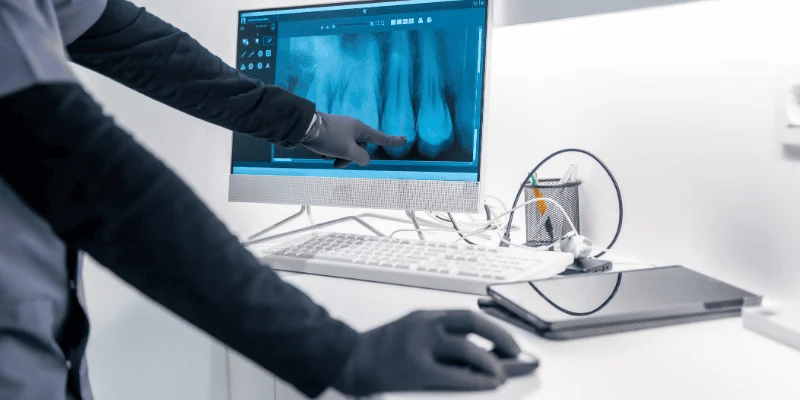
Modern implant technology relies on detailed imaging to plan your treatment accurately. Your dentist will use X-rays or CT scans to measure your bone dimensions precisely.
These scans reveal bone quality and density in three dimensions. They help identify areas where bone might be sufficient for implants without grafting. The images also show important structures like nerves and sinuses that must be avoided during placement.
Advanced imaging lets your dental team create a digital treatment plan before surgery begins. This technology helps determine if your existing bone can support implants and identifies the best placement angles.
Some practices use 3D imaging to fabricate surgical guides that make the procedure more predictable and less invasive.
The Consultation Process with an Oral Surgeon
Oral surgeons complete extensive training including four years of dental school plus four to six additional years of surgical residency. They’re particularly qualified to evaluate complex cases and determine your dental care options.
During your consultation, the surgeon examines your mouth and reviews your imaging results. They’ll discuss whether your bone is adequate for immediate implant placement or if you need preparatory procedures.
You should ask specific questions about success rates for your situation. Find out how many similar cases they’ve completed and what outcomes you can realistically expect. The surgeon will explain alternative approaches if grafting can be avoided through techniques like shorter implants or angled placement.
Meet with an implant specialist across Virginia clinics in Fredericksburg, Fairfax, Manassas, or Stafford and get a treatment plan tailored to your bone health and goals.
Frequently Asked Questions
People with bone loss still have options for dental implants, including smaller implants, angled placement techniques, and specialized procedures that work with existing bone structure.
Understanding your candidacy depends on bone density testing and evaluating alternative methods that modern dentistry offers.
What options are available for dental implants if I have low bone density?
You have several choices even with low bone density. Shorter or narrower implants can fit into areas with less bone volume. These smaller implants work well for people who don’t have enough bone height or width for standard-sized implants.
Zygomatic implants offer another solution if you have severe bone loss in your upper jaw. These longer implants anchor into your cheekbone instead of your jawbone. This approach skips the need for bone grafting entirely.
The All-on-4 technique uses just four strategically placed implants to support a full arch of teeth. The implants are angled to make the most of your available bone. This method often works for patients who would otherwise need extensive bone grafting.
Are there alternatives to bone grafting for supporting dental implants?
Angled implant placement is a common alternative to bone grafting. Your dentist can position implants at specific angles to use the strongest parts of your existing bone. This technique works especially well in the upper jaw near your sinuses.
Mini dental implants provide another option for people with reduced bone volume. These implants have a smaller diameter than traditional implants. They require less bone support and can often be placed even in areas with some bone loss.
Some dentists use 3D imaging and computer-guided surgery to find the best placement for implants. This technology helps identify areas where your bone is strongest. It allows for precise implant positioning without adding bone through grafting.
How can I tell if I’m a good candidate for dental implants without bone grafting?
You need sufficient bone height and width at the implant site to qualify for implants without grafting. Your jawbone should be healthy and dense, even if it’s slightly thin in certain spots. A dentist will need to examine your mouth to make this determination.
Your dentist will use special imaging tests to check your bone quality. Cone-beam CT scans show exactly how much bone you have and where it’s located. These detailed images help your dentist decide if you can skip bone grafting.
Your overall health affects your candidacy too. Certain medications and habits like smoking can impact healing and success rates. You’ll need to discuss your medical history with your dentist during evaluation.
What modern techniques are used to avoid bone grafts in dental implant procedures?
Computer-guided implant surgery uses 3D scans to plan exact implant placement. This technology lets dentists work with your existing bone structure more effectively. It reduces the need for bone grafting by finding the optimal position for each implant.
The All-on-4 method is one of the most popular techniques for avoiding bone grafts. It angles two back implants to maximize contact with available bone. The front implants are placed straight down where bone is typically stronger.
Pterygoid implants anchor into the pterygoid bone at the back of your upper jaw. This area usually maintains good bone density even after tooth loss. These specialized implants work for severe upper jaw bone loss without requiring grafts.
Can mini dental implants be an option for those without enough bone mass?
Mini dental implants are about half the diameter of regular implants. They need less bone support because of their smaller size. This makes them useful for people with bone loss who want to avoid grafting procedures.
These smaller implants work well for stabilizing dentures. They can also replace single teeth in areas with limited space. The placement procedure is less invasive than traditional implants.
Mini implants have some limitations compared to standard implants. They may not be strong enough for heavy chewing forces on back teeth. Your dentist can tell you if mini implants will work for your specific situation.
What are the risks of getting dental implants without a bone graft?
Implant failure is the main risk when you don’t have enough bone support. An implant needs adequate bone to stay secure and stable. Without sufficient bone, the implant may become loose or fall out completely.
Nerve damage can occur if an implant is placed too close to nerves in your jaw. This happens more easily in areas with limited bone because there’s less room for error. Proper planning with 3D imaging helps reduce this risk.
Sinus problems may develop if upper jaw implants penetrate into your sinus cavity. This complication is more likely when you have bone loss in your upper jaw. Your dentist will carefully measure bone depth to avoid this issue.