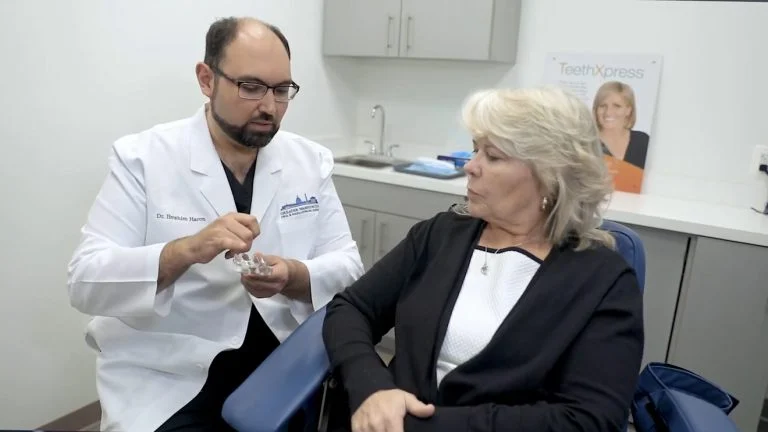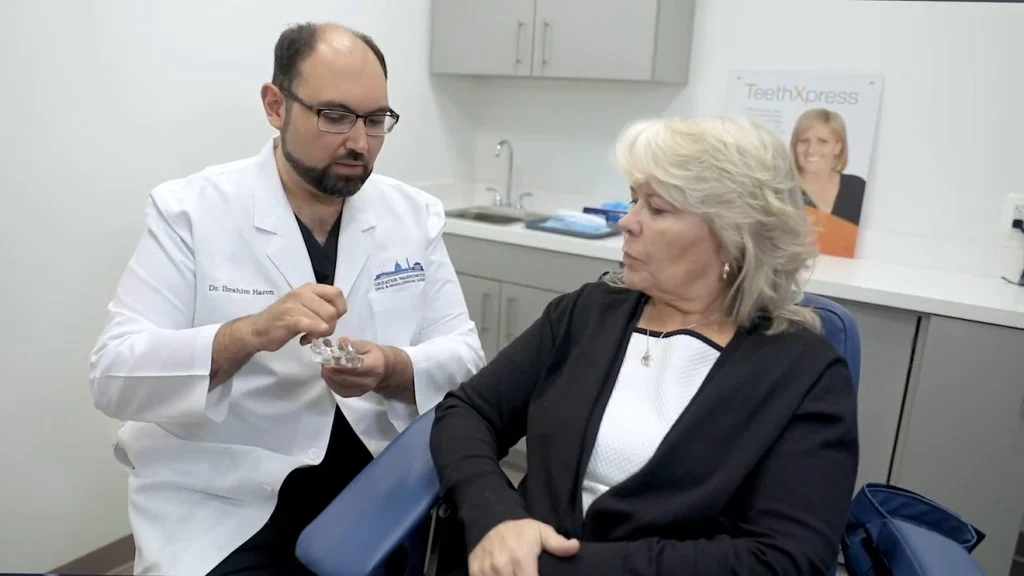

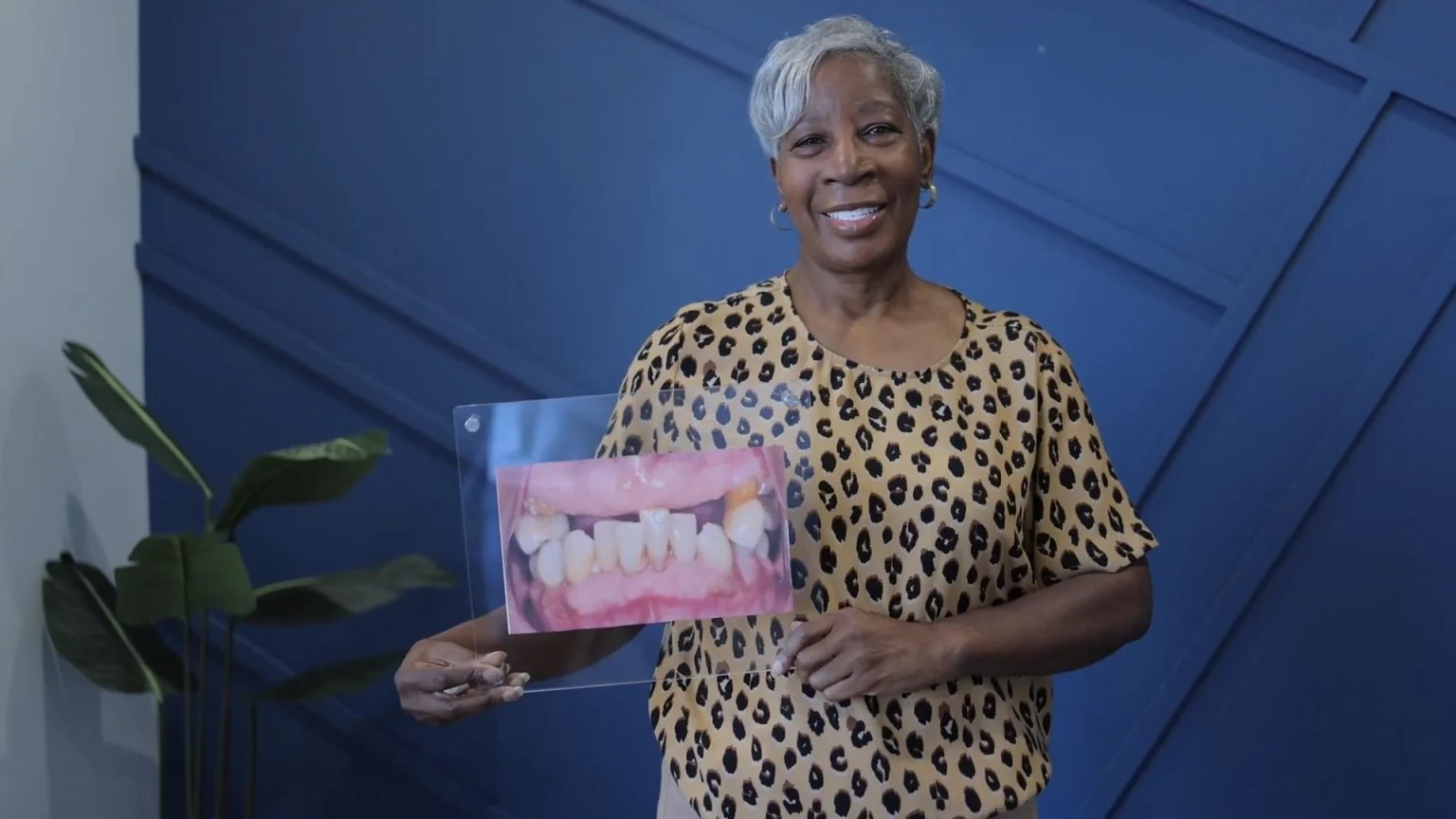
Congratulations on taking an important step toward restoring your smile! Dental implants provide a permanent foundation for replacement teeth, and proper aftercare will help ensure your implant integrates successfully with your jawbone. Some discomfort, swelling, and light bleeding are completely normal following implant surgery. We’ve organized this guide to walk you through each stage of your recovery.
The First 24 Hours: Immediate Care
Protecting the Implant Site
Your implant needs time to bond with the surrounding bone through a process called osseointegration. During the first 24 hours and beyond:
- Do NOT pull on your lip to view the surgical site
- Do NOT probe the area with your tongue or fingers
- Do NOT disturb the implant in any way
These activities can interfere with proper healing and implant integration.
Managing Discomfort
Some pain and discomfort is normal after implant surgery. You can manage it by:
- Taking ibuprofen (Advil, Motrin) or acetaminophen (Tylenol) according to the label instructions or as directed by our office
- Taking pain medication before the anesthesia wears off for best results
- Using prescribed medications exactly as directed
What to Avoid
During the first 24 hours, do NOT:
- Suck on a straw
- Brush near the surgical site
- Rinse your mouth
- Spit forcefully
- Smoke
These activities can disturb the blood clot and interfere with proper healing around your implant.
Diet Restrictions
Stick to liquids and soft foods for the first few days:
- Soups (lukewarm, not hot)
- Yogurt
- Smoothies (no straw)
- Juice
- Mashed potatoes
- Scrambled eggs
For the first 24 hours, you may experience some sensitivity to cold and heat. Avoid hot and spicy foods, as well as carbonated and alcoholic beverages.
Rest and Activity
Restrict your activities on the day of surgery. Avoid excessive work or strenuous physical activity. You can resume normal activities the following day as you feel comfortable.
Medications
Take all prescribed medications exactly as directed:
- Antibiotics: If prescribed, complete the entire course to help prevent infection
- Pain medication: Take as needed for comfort
- Any other medications provided by our office
Days 2-3: Reducing Swelling
Managing Swelling
Swelling around your face, eyes, and the implant site is common and often becomes most noticeable two to three days following surgery. This is a normal part of healing.
Cold Therapy (First 36 Hours)
- Apply a cold compress to the outside of your face near the implant site
- Never apply ice directly to your skin; always use a cloth barrier
- Use for 20 minutes on, then 20 minutes off
- Repeat as needed throughout the day
- After 36 hours, cold therapy becomes less effective
Warm Therapy (After 36 Hours)
- Switch to moist heat applications on the sides of your face
- Use a warm washcloth or heating pad
- Continue the 20 minutes on, 20 minutes off pattern
- This helps reduce lingering swelling
Starting Oral Hygiene
After the first 24 hours, you can begin gentle oral care:
Salt Water Rinses
- Mix one half teaspoon of salt in an eight ounce glass of warm water
- Rinse gently three times a day
- Do not swish vigorously; let the water move gently through your mouth
- Do not spit forcefully; lean over and let the water fall out
Brushing
- Brush and floss the rest of your mouth as instructed by our office
- Avoid brushing your teeth near the implant surgery site until cleared to do so
- Be very gentle around surgical areas
Days 4-7: Continued Healing
Expanding Your Diet
As you feel comfortable, you can gradually introduce more solid foods. Continue to avoid anything hard, crunchy, or chewy that could put pressure on the implant site. Foods like chips, crackers, popcorn, and nuts should be avoided as they can get stuck in the surgical area.
Remember: While soft tissues typically heal within a few weeks, the bone around your implant requires several months to fully integrate. Be patient and gentle with the implant site during this time.
If You Wear a Denture
If you have a denture that overlaps the implant site:
- Minimize wearing the denture immediately following surgery to allow the site to heal
- After the first week, you can gradually increase the amount of time you wear your denture
- Follow any specific instructions provided by our office regarding denture use
The Importance of Follow-Up Appointments
This is essential: Keep all scheduled follow-up appointments so we can monitor your healing progress and ensure your implant is integrating properly with your jawbone. These checkups are critical to your long-term success.
Understanding Normal Healing
Normal healing after implant surgery typically follows this pattern:
- Days 1-2: Most swelling occurs
- Day 3: Greatest discoloration and bruising may appear
- Days 4-7: Gradual improvement in comfort and swelling
- Weeks 2-4: Soft tissue healing continues
- Months 3-6: Bone integration (osseointegration) occurs
If you don’t see slow, steady improvement after the first few days, please contact our office.
When to Call Our Office
Contact us immediately if you experience:
- Excessive bleeding or discomfort after 48 to 72 hours
- Pain and swelling that increase after a few days rather than improve
- Signs of infection (fever, increasing pain, pus, or foul taste)
- The implant feels loose
- Difficulty swallowing or breathing
- Any concerns about your healing progress
For serious or life threatening emergencies, please call 911 or visit the nearest emergency room.
Questions?
If you have any questions or concerns during your recovery, please call our office. Protecting your implant during the healing process is essential for long-term success, and we’re here to support you every step of the way toward your new, confident smile.