

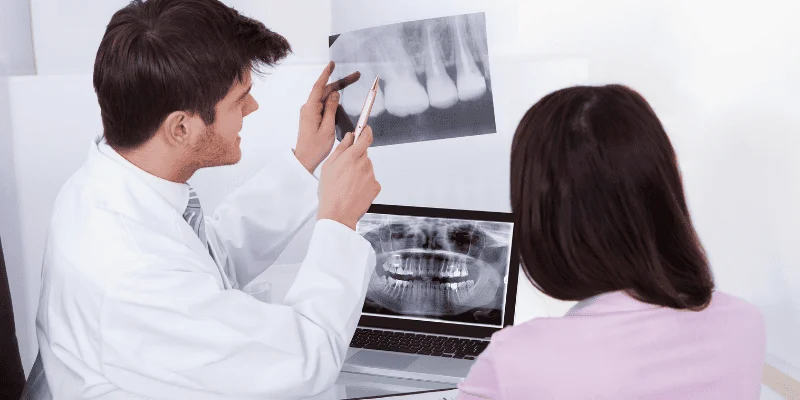
Many people worry about their body rejecting a dental implant, but this concern is often based on a misunderstanding.
The main difference is that true implant rejection from an immune response is extremely rare with titanium dental implants, while implant failure from infection, poor healing, or mechanical issues happens more often but is still uncommon.
When you hear about dental implant problems, what’s actually happening in most cases is failure, not rejection.
Your body doesn’t treat dental implants the same way it would treat a transplanted organ. Titanium implants are designed to work with your body, not against it. Understanding the difference between dental implant rejection vs failure helps you know what signs to watch for and when to contact your dentist.
The good news is that dental implants have success rates of 90-95%. When problems do occur, they usually come from preventable causes like infection or poor bone quality.
Knowing the early warning signs of implant failure can help you get treatment quickly and save your implant.
Key Takeaways
- True immune rejection of dental implants is very rare because titanium naturally integrates with bone tissue
- Most implant problems are failures caused by infection, poor healing, or mechanical issues, rather than body rejection
- Early detection of warning signs like pain, swelling, or mobility can help prevent complete implant loss
Understanding Implant Failure and Implant Rejection
The terms failure and rejection get used interchangeably when talking about dental implants, but they describe different problems with distinct causes. Rejection occurs when the body’s immune system reacts to the implant, while failure happens when the implant doesn’t integrate properly with your bone.
Defining Implant Failure
Dental implant failure happens when your implant doesn’t successfully fuse with your jawbone through a process called osseointegration. This can occur at different stages of your treatment.
Early implant failure means your implant shows clinical mobility before the placement of a final prosthesis. This typically happens within the first few months after placement. Poor bone quality, surgical trauma, infection, or lack of primary stability can cause early failure.
Late implant failure occurs 1-3 years after placement. Peri-implantitis, excessive loading, bruxism, or poor prosthetic construction often lead to late failure.
Your implant might fail due to local factors like infection or surgical complications. Systemic factors such as uncontrolled diabetes, smoking, or certain medications can also prevent proper healing and integration.
Defining Implant Rejection
True rejection occurs when your immune system attacks the implant material as a foreign object. However, this is extremely rare with dental implants made from titanium.
Research shows that what most people call “rejection” is actually implant failure caused by biological problems where your body does not accept the implant. The implant loosens and loses functionality due to inflamed or infected tissue around it.
Titanium is biocompatible, meaning your body rarely treats it as a threat. When problems occur, they’re usually related to infection, poor healing, or mechanical issues rather than an immune response.
Key Differences Between Failure and Rejection
The main distinction lies in the cause. Rejection involves your immune system actively fighting the implant material. Failure means the osseointegration process didn’t work properly due to other factors.
Implant failure can result from:
- Bacterial infection and peri-implantitis
- Poor surgical technique or placement
- Insufficient bone quality or quantity
- Excessive force or improper loading
- Smoking or systemic health conditions
True implant rejection involves:
- Immune system response to foreign material
- Allergic reactions to implant components
- Hypersensitivity to metals (extremely rare with titanium)
Your symptoms might look similar in both cases. You could experience pain, swelling, mobility issues, or infection around the implant site. The underlying cause determines whether you’re dealing with failure or rejection, though failure is far more common.
Common Signs and Symptoms to Watch For
Knowing what symptoms signal trouble with your dental implant helps you get treatment quickly. Pain, swelling, and movement around the implant site are key warning signs that something needs attention.
Signs of Dental Implant Failure
Dental implant failure happens when the implant doesn’t bond properly with your jawbone. This process is called osseointegration.
You might notice persistent pain or discomfort that doesn’t improve over time. While some pain is normal right after surgery, it should gradually get better. Pain that continues or gets worse after several weeks needs attention.
Swelling and redness around the implant site can point to problems. Your gums might also start pulling away from the implant, exposing the metal underneath. This gum recession makes the area more prone to infection.
Bone loss around the implant shows up on X-rays. Your dentist can spot this during regular checkups. Chronic bad breath or an unpleasant taste in your mouth often means bacteria are growing around the failing implant.
Signs of Implant Rejection
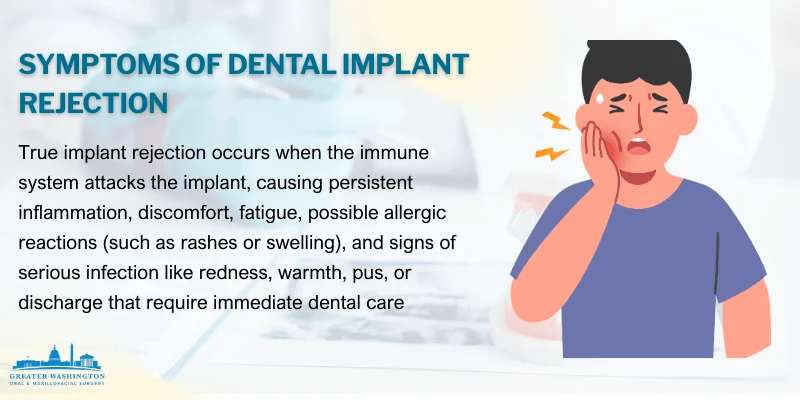
True implant rejection is different from failure. Rejection occurs when your immune system treats the implant as a foreign object and attacks it.
Signs of rejection include ongoing inflammation that doesn’t respond to normal treatment. You might experience unexplained fatigue along with discomfort at the implant site.
Some people have allergic reactions to titanium, though this is rare. Symptoms can include skin rashes, persistent swelling, or a feeling that something isn’t right with your body. If you suspect an allergy, testing can help identify the problem before or after implant placement.
Pus or discharge around the implant signals a serious infection. This needs immediate dental care. The area might feel warm to the touch and appear very red or inflamed.
Implant Mobility and Loose Dental Implants
A loose dental implant is one of the clearest signs something is wrong. Your implant should feel stable and secure, just like a natural tooth.
If you notice your implant feeling loose or moving when you touch it, contact your dentist right away. Movement during the healing period means the implant isn’t integrating with your bone as it should. Even slight mobility is a red flag.
Implant mobility can make chewing difficult and painful. You might feel the implant shift when you bite down on food. This instability often gets worse over time if left untreated.
A loose implant needs professional evaluation. Your dentist will check the bone around the implant and look for signs of infection or poor integration. Early treatment gives you the best chance of saving the implant or planning for a replacement.
Worried about implant complications? Schedule your visit today to check your implant health and prevent potential failure early.
Types and Timing of Implant Failure and Rejection
Dental implant problems fall into two main time periods based on when they happen. Early issues show up within the first few months after surgery, while late problems develop after the implant has been in place for a year or more.
Early Implant Failure and Early Implant Rejection
Studies show that early implant failure happens when your implant shows movement before your dentist places the final crown or restoration. This usually occurs within the first three to four months after surgery.
When your body doesn’t accept the implant during this early healing phase, dentists call it rejection. Your bone needs to grow around and fuse with the implant in a process called osseointegration. If this doesn’t happen, the implant will feel loose or move when touched.
Common causes of early failure include:
- Poor bone quality or not enough bone at the implant site
- Surgical trauma from overheating during placement
- Infection at the surgical site
- Smoking during the healing period
- Uncontrolled diabetes or other systemic diseases
- Lack of initial stability when the implant is first placed
You might notice pain, swelling, or movement of the implant during this early period. Your dentist will need to remove a failing implant quickly to prevent more bone loss.
Late Implant Failure and Late Implant Rejection
Late implant failure develops one to three years after your implant placement, though it can happen even later. Your implant successfully fused with the bone initially, but problems develop over time.
The most common cause of late failure is peri-implantitis. This bacterial infection attacks the tissues and bone around your implant. Food particles and plaque build up around the implant, creating inflammation that destroys the supporting bone.
Other causes of late failure include:
- Too much chewing force on the implant
- Grinding your teeth at night
- Cement left under the gums during crown placement
- Poor design of the restoration
- Traumatic bite forces
Late failure often develops slowly. You might notice bleeding when you brush, swelling around the implant, or a bad taste in your mouth. The implant may eventually become loose if the bone loss continues.
Underlying Causes and Risk Factors
Different factors contribute to implant failure and rejection, ranging from infections and poor bone quality to lifestyle choices like smoking. Understanding these causes helps you take steps to protect your investment in dental implants.
Causes of Implant Failure
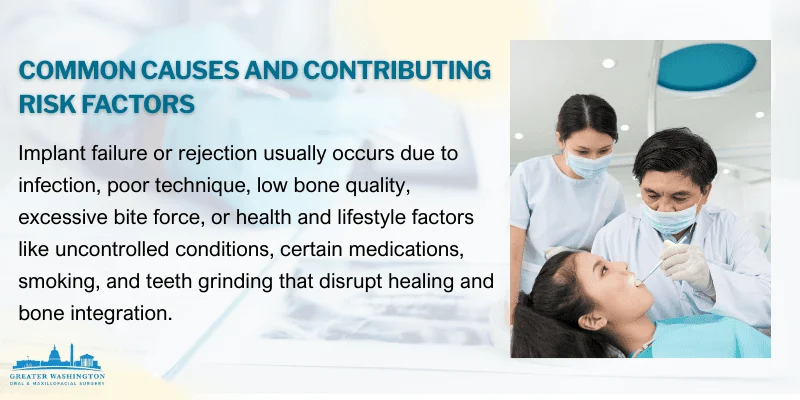
Implant infection is the most common cause of dental implant failure. Peri-implantitis happens when bacteria build up around your implant, causing inflammation and bone loss in the surrounding tissue. This condition often starts as mucositis, which affects only the soft tissue before progressing deeper.
Poor surgical technique can also lead to failure. If your dentist doesn’t use enough irrigation during surgery or overheats the bone, it can prevent proper healing. Excessive force on your implant before it fully integrates with the bone creates micromotion that disrupts the bonding process.
Overloading your implant with too much pressure is another problem. This happens when the force placed on your implant exceeds what the surrounding bone can handle. Poor prosthesis design, combined with low bone quality, makes this issue worse.
Causes of Implant Rejection
Your body rejecting an implant typically occurs in the early stages before your dentist places the final restoration. Poor bone quality and insufficient bone volume make it harder for the implant to integrate properly with your jaw.
Bone quality and quantity problems often require bone grafting procedures before implant placement. Without adequate bone structure, your implant lacks the foundation needed for stability.
Lack of primary stability during the initial placement prevents the implant from staying secure during the healing period. Surgical trauma from aggressive handling of tissues can also trigger rejection by damaging the surrounding bone and preventing proper integration.
Systemic and Lifestyle Risk Factors
Several health conditions and habits increase your risk of implant problems:
Medical conditions that affect healing include uncontrolled diabetes, osteoporosis, and immune system disorders. These conditions slow down your body’s ability to bond with the implant.
Medications like corticosteroids and bisphosphonates interfere with bone metabolism and healing. You should discuss all medications with your dentist before implant surgery.
Smoking significantly reduces success rates for dental implants by restricting blood flow to your gums and bone. Smokers face much higher rates of peri-implant disease.
Bruxism or teeth grinding puts excessive stress on your implants during sleep. Your dentist may recommend a night guard to protect your implants from this constant pressure.
Experiencing pain, swelling, or movement around your implant? Contact our team promptly to evaluate and address issues before they worsen.
Prevention, Diagnostics, and Treatment Options
Good oral hygiene and early detection can prevent most implant problems, while several treatment options exist if your implant does fail. The right approach depends on catching issues early and understanding whether repair, removal, or replacement makes the most sense for your situation.
Preventing Dental Implant Failure

You can take specific steps to prevent dental implant failure and protect your investment. Good oral hygiene is your first line of defense. Brush twice daily and floss around your implants just like you would with natural teeth.
Regular dental check-ups matter more than you might think. Your dentist can spot early warning signs like gum recession or screw loosening before they become serious problems. If you smoke, quitting significantly improves your chances of success.
Key Prevention Steps:
- Schedule professional cleanings every 3-6 months
- Use a soft-bristled toothbrush around implant sites
- Avoid chewing ice or hard foods that stress implants
- Manage conditions like diabetes that affect healing
- Wear a night guard if you grind your teeth
Diagnostic Approaches
Your dentist uses several methods to check implant stability and catch problems early. Visual examination reveals signs like swelling, redness, or bleeding around your implant. Probing depths of 6 mm or more suggest infection.
X-rays show bone loss around the implant that you can’t see above the gum line. Your dentist might also use special tools to test how firmly your implant sits in the bone. Pain, mobility, or pus discharge are clear signs something needs attention.
Early detection makes treatment easier and more successful. Don’t ignore symptoms like discomfort or slight movement around your implant.
Treatment and Implant Removal
Research shows that when an implant shows obvious mobility, quick removal prevents more bone loss that would make replacement harder later. Your dentist removes failing implants to protect the surrounding bone and tissue.
For infections without mobility, treatment might include deep cleaning of the implant surface with special instruments. Antibiotics can help fight bacterial infections. Laser therapy or photodynamic treatment offers additional options for decontamination.
If removal becomes necessary, your dentist uses surgical techniques or special tools called trephines to take out the failed implant carefully. The goal is always to preserve as much healthy bone as possible for future treatment.
Re-Implantation and Bone Regeneration
You have several options after implant removal depending on how much bone remains. Re-implantation can happen immediately with a larger diameter implant if enough bone exists. This approach gets you back on track faster.
Study highlights that guided bone regeneration rebuilds lost bone using membrane-covered bone grafts. This technique shows the best results for re-osseointegration compared to other methods. Ridge augmentation adds bone width or height to areas that need it.
A staged approach works better when significant bone loss occurred. Your dentist rebuilds the bone first, lets it heal for several months, then places a new implant. This delayed method takes longer but provides a stronger foundation for your replacement implant.
Noticing discomfort around your implant? Visit our specialists across VA, in Fairfax, Manassas, Fredericksburg, or Stafford for a prompt assessment and expert care.
Frequently Asked Questions
Implant complications raise many questions for patients. Understanding the differences between failure and rejection, along with warning signs and treatment options, helps you make informed decisions about your dental care.
Can you explain why an implant might fail?
An implant can fail for several reasons related to either the surgical procedure or healing process. Dentist errors during placement include overheating the bone with blunt instruments, not maintaining proper sterility, or choosing a location with insufficient bone density.
Your own actions during recovery also matter. If you ignore post-surgery instructions like avoiding physical activity or skipping prescribed medications, you increase the risk of failure.
The implant might not bond with your bone within the first 3-6 months after placement. This early failure is called non-integration and happens in about 1-2% of cases.
What are the signs of an implant rejection?
Several warning signs indicate your implant may be rejecting. You might feel pain while chewing or notice persistent sharp pain that doesn’t go away after the first few days.
Symptoms of rejection include swelling that increases rather than decreases after the third day. A fever above 38°C that lasts more than three days signals a problem.
Watch for pus discharge from the surgical area, which often comes with an unpleasant mouth odor. If your implant feels loose or mobile, you need to see your dentist right away.
How can I tell the difference between rejection and failure of an implant?
The main difference is timing. Failure to integrate happens within the first few weeks or months when the bone never forms around the implant initially.
Rejection occurs later, typically 1-5 years after placement. This happens after the implant successfully bonds with your bone, but then loses that connection over time. The risk of rejection is higher at 4-5% compared to the 1-2% risk of early failure.
Normal healing includes some swelling, pain, and low-grade fever for the first few days. These symptoms should improve by day three or four. If they worsen or continue past five days, you’re likely dealing with a complication.
What are the common causes of implant rejection?
Implant overload from an incorrectly fitted crown can create bite problems that stress the implant. Planning errors, like placing the implant too close to other teeth or having insufficient gum tissu,e increase rejection risk.
Poor oral hygiene leads to bacterial buildup around the implant. This causes peri-implantitis, an inflammation that destroys the bone supporting your implant.
Smoking significantly increases your chances of rejection. Nicotine restricts blood flow to the area and promotes harmful bacteria growth in your mouth.
Chronic health conditions like diabetes can trigger rejection if they flare up after surgery. Your body’s immune response changes when these diseases aren’t well-controlled.
What kind of treatments are available if an implant fails?
Treatment depends on catching the problem early. If you develop mucositis, which is inflammation of the gum tissue only, your dentist can clean the implant surface and prescribe antibiotics to save it.
Peri-implantitis treatment varies by severity. In early stages with minimal bone loss, removing affected tissue and using antibiotics often works. Middle-stage cases require cleaning out infected tissue and rebuilding bone.
Severe cases need complete implant removal. After removal, your dentist treats the underlying cause with antibiotics and rebuilds the bone and tissue. You can get a new implant placed once the area fully heals.
Are there any preventative measures to avoid implant failure or rejection?
Choose a licensed clinic with experienced dentists who use modern technology and high-quality implant systems. Your dentist should perform thorough examinations, including CT scans, before placing the implant.
Tell your dentist about all chronic health conditions and habits like smoking. This information helps them prepare properly and adjust the treatment plan.
Follow all post-surgery instructions carefully. Avoid saunas, flights, and heavy exercise during the recovery period. Take prescribed medications as directed.
Maintain excellent oral hygiene by brushing regularly and using an irrigator to clean around the implant. Attend all scheduled follow-up appointments so your dentist can monitor healing and catch problems early.