

Introduction
Dental implants have become a gold-standard solution for replacing missing teeth due to their high success rates and longevity. In the United States, implant usage has risen dramatically in the past decade, reflecting both advancements in implant technology and an aging population’s need for tooth replacement.
This study guide examines dental implant success rates US, Virginia, using recent clinical data from the past 5–10 years, along with projections beyond 2026.
A special focus is given to Northern Virginia, comparing its trends (where possible) to national averages. The goal is to provide a comprehensive, research-oriented overview of implant outcomes, drawing on peer-reviewed studies, government health data, and reputable dental associations.
Key context: By 2015–2016, about 5.7% of U.S. adults had at least one dental implant – a figure that was only 0.7% in 1999. Projections suggest that implant prevalence could climb substantially; in an optimistic scenario, up to 23% of U.S. adults with missing teeth may have implants by 2026.
This surge in implant placement underscores the importance of understanding their safety profile and success outcomes at both national and regional levels. Northern Virginia, known for its high-quality healthcare and affluent population, is expected to mirror or even exceed some national trends in implant adoption.
This guide will explore: the general success rates of dental implants, their safety and potential complications, and how Northern Virginia compares to broader U.S. data. Tables and structured comparisons are included to enhance clarity and detail.
Prevalence and Trends of Dental Implants (2015–2026)
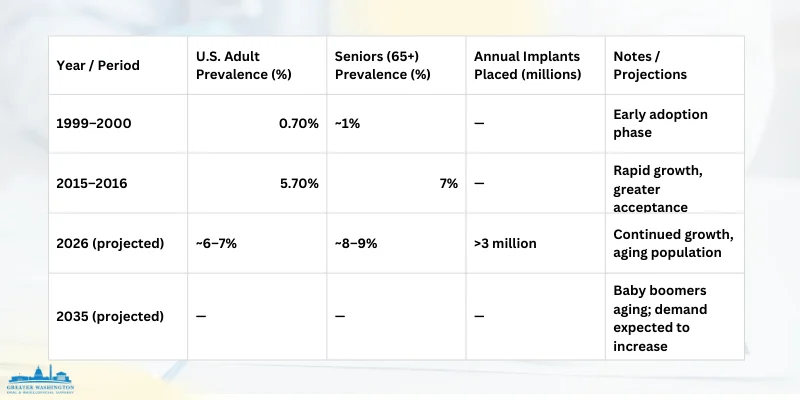
Dental implant utilization in the U.S. has grown exponentially in recent years. Key trends and statistics include:
- Rising Prevalence: The proportion of U.S. adults with dental implants increased nearly ten-fold around the turn of the century. It rose from approximately 0.7% in 1999–2000 to 5.7% in 2015–2016. Among older adults (ages 65+), the growth is even more striking – implant prevalence in seniors increased about sevenfold since 2000 (from ~1% to over 7%). This reflects greater acceptance of implants as a routine treatment for tooth loss in the elderly.
- Regional and Socioeconomic Factors: Utilization of implants is higher in more advantaged populations. For example, having private dental insurance or higher education correlates with roughly 2× higher implant prevalence (compared to uninsured or less-educated groups). Because Northern Virginia is a relatively affluent region with widespread insurance coverage, implant uptake in Northern Virginia is likely at the high end of national ranges, though precise regional data are limited. The same national study found older adults were far more likely to have implants (up to 13-fold increase in prevalence for seniors versus younger adults), suggesting regions with larger senior populations (including parts of Virginia) see higher implant demand.
- Number of Implants Placed: Alongside prevalence, the absolute number of implants placed annually has climbed. By 2016, millions of implants were being placed each year in the U.S., and this number continues to rise. One projection estimated that annual implant placements would exceed 3 million by 2026, driven by demographic trends (more older adults retaining some natural teeth but seeking to replace lost teeth) and patient preference shifting from dentures to implants.
- Future Projections (Beyond 2026): The growth trajectory is expected to continue beyond 2026. The aging “baby boomer” generation is entering age groups with higher tooth loss, fueling implant demand. By 2035, the U.S. Census predicts adults over 65 will outnumber youth, which could further increase the need for implants. If current trends persist, dental implants may become a commonplace restorative procedure for a significant segment of the population in the next decade. In monetary terms, the U.S. dental implant market (reflecting demand) was projected to reach $2.3 billion in 2026 (approximately 6% annual growth). Overall, implants are poised to remain a major component of restorative dentistry moving forward.
Northern Virginia Focus: Specific data for Northern Virginia’s implant rates are not extensively published. However, Northern Virginia (which includes suburbs of Washington, D.C., such as Fairfax, Arlington, and Loudoun counties) has a relatively high median income and education level compared to national averages.
These factors historically correlate with greater utilization of advanced dental treatments, including implants. We can infer that Northern Virginia’s implant adoption is robust, likely comparable to other well-served urban regions.
Patients in Northern Virginia benefit from a high density of dental specialists and surgeons, suggesting local implant success rates and safety standards would match the strong national performance detailed below.
Speak directly with an implant specialist now to learn how your individual risk factors affect long-term implant success and what steps improve your outcome.
Dental Implant Success Rates (Short-Term and Long-Term)
Dental implants are widely regarded as one of the most successful interventions in modern dentistry. Success is often defined in two ways:
- Implant Survival: The implant remains in place and functional (i.e. not lost or removed) over time.
- Clinical Success: The implant is not only present, but also meets specific clinical criteria (no significant bone loss, no pain, no infection, etc.). Success criteria are stricter than mere survival.
Multiple systematic reviews and studies in the past 5–10 years report very high survival rates for implants, especially in the short to medium term. Table 1 summarizes representative success metrics from recent studies:
Table 1. Dental Implant Survival Rates Over Time (U.S. and International Studies)
| Follow-Up Period | Reported Survival Rate | Source (Study/Review) |
| 3–5 years (short-term) | Approximately 95–99% – Implants show excellent short-term survival in both specialized and general practice settings. For instance, a large network study of general dentists found 97.8% implant survival at ~4 years follow-up. Most failures in this period are rare, early issues. | PEARL Network practice-based study; Frontiers review of literature (2023) |
| 10 years (long-term) | Around 90–95% – The majority of implants remain functional after a decade. A systematic review found roughly 93% 10-year survival (95% CI ~90–96%) across many studies. Similarly, literature reviews note “over 90%” survival at 10+ years. | Howe et al. 2019 (J. Dental Research); König et al. 2024 (meta-analysis) |
| 20 years and beyond | Approximately 80–90% – Long-term data indicate most implants can last decades, though some late failures occur. A recent 20-year meta-analysis reported about 80% of implants still successful at 20 years. (Retrospective studies showed ~88% survival at 20 years, while prospective data showed 78% after accounting for drop-outs.) These outcomes highlight the importance of long-term maintenance, as a subset of implants may develop complications over extended periods. | König et al. 2024 (Clin. Oral Investigations meta-analysis) |
As shown in the table, short-term implant success consistently exceeds 95% in the general population, and even at ten years post-surgery, around 9 in 10 implants typically remain healthy.
The American Association of Oral and Maxillofacial Surgeons (AAOMS) affirms an overall success rate of ~95% for dental implants, making them one of the most predictable treatments in dentistry.
In fact, implant therapy today boasts “success rates among the highest of any type of surgical implant” in medicine.
It is important to note that reported success rates can vary slightly based on definitions and populations:
- Studies that define “success” strictly (including criteria like minimal bone loss) report lower rates than those defining only “survival.” For example, in a practice-based U.S. study, implant survival was 97.8%, but the stringent success rate (no peri-implant bone loss beyond 2 mm) was 81.3% at ~4 years. This gap illustrates that some implants remain in place with minor issues (bone loss) that don’t require removal but do count against ideal success.
- Success rates in specialized clinics vs. general practice are comparable in modern data. Earlier concerns that general dentists might have lower success have not borne out significantly; with proper training and case selection, general practitioners also report ~95% short-term success. Specialists or academic centers may in some cases report slightly higher success, but the difference is not dramatic given standardized implant systems and protocols today.
Northern Virginia vs. National Success: There is no evidence of any regional deficit in implant success rates for Northern Virginia. On the contrary, patients in Northern Virginia often have access to experienced oral surgeons, periodontists, and implant dentists, suggesting outcomes equal to the national benchmarks.
High success is expected across the population in this region, as long as patients maintain follow-up care. Implants placed in Northern Virginia benefit from the same advancements (such as 3D imaging, guided surgery, and improved implant surfaces) that have boosted success rates nationally.
In summary, a patient in Northern Virginia can anticipate ~95% chance of implant success in the first several years, and around 90% or better over 10+ years, paralleling U.S. averages.
Meet with our implant specialists across Fredericksburg, Fairfax, Manassas, or Stafford to review imaging, discuss success rates, and build a long-term tooth replacement plan.
Safety and Complications of Dental Implants
Beyond raw success percentages, safety profiles of dental implants are critical. Overall, implants are considered a safe and well-established procedure when performed by trained professionals.
Millions of implants have been placed with minimal adverse events. However, like any surgical intervention, implants carry some risks. Key points on safety and potential complications include:
- Intra-Operative Safety: Dental implant surgery is typically done under local anesthesia (with sedation if needed) in an outpatient setting. Serious surgical complications are rare. Precision imaging (CT scans) and planning software have minimized the risk of improper implant placement. That said, if an implant is placed incorrectly, nerve injury can occur (e.g. numbness in the lip or chin if the inferior alveolar nerve is traumatized). The incidence of permanent nerve damage is very low (well under 1% in most reports) but this underscores the need for careful planning. In the upper jaw, there is a small risk of sinus membrane perforation when implants are placed in the back (molar) region, which can lead to sinus issues if not managed. Again, using proper surgical technique (or ancillary procedures like sinus lift bone grafts when needed) keeps this risk minimal.
- Early Implant Failure: A small percentage of implants fail in the initial healing phase (within weeks to months after placement). Early failures are most often due to lack of osseointegration – the bone does not properly fuse to the implant. Clinical studies show early failure rates on the order of only ~2–5%. For example, one analysis noted a 5.4% early failure rate in general, with risk factors including smoking, being male, and younger age (younger patients may paradoxically have slightly higher early failure, possibly due to more robust but quick-healing bone that can also resorb faster). Common causes of early failure include infection of the site or poor initial stability of the implant. Preventive measures – such as pre-surgical antibiotics or antimicrobial rinses, and careful surgical technique – are used to mitigate infection risk. Patients are also advised to avoid smoking during healing and manage any systemic conditions (like diabetes) to improve healing, since uncontrolled diabetes or smoking significantly raise early failure risk by impairing bone healing. The good news is that if an implant fails early, it can often be removed and, after bone healing, replaced with a new implant successfully.
- Long-Term Complications: After an implant has successfully integrated and been in function, the main safety concern becomes peri-implantitis – an inflammatory condition similar to gum disease around an implant. Peri-implantitis involves bacterial infection that leads to loss of the supporting bone over time. Estimates of peri-implantitis prevalence vary, but it may affect roughly 10–20% of implants over 5–10 years to some degree, especially in patients with a history of periodontal (gum) disease. Signs include gum inflammation, bleeding, or deepening pockets around the implant. If untreated, it can cause implant loosening in severe cases (a cause of late failure). The NIH’s 2021 oral health report notes that as implants become more common, concern about peri-implantitis is increasing, highlighting the need for research into risk factors and prevention. Regular maintenance – professional cleanings and exams – is strongly recommended for implant patients to catch peri-implant issues early. Treatment can involve deep cleaning, localized antibiotics, or surgical decontamination of the implant surface, depending on severity.
- Prosthetic/Mechanical Problems: Implants themselves do not decay like natural teeth, but the restorations (crowns, bridges, or dentures attached to implants) can experience wear or fracture. Mechanical complications include abutment screw loosening or fracture, porcelain crown chipping, or wear of attachment components in implant-supported dentures. These are usually manageable and not considered implant “failures” as the implant post remains intact. Studies have noted that some long-term “complications” in implant success statistics are due to prosthetic issues rather than the implant fixture failing. Generally, a well-made crown on a single implant can last 10-15 years or longer, but patients might need minor maintenance such as screw tightening or crown replacement over decades.
- Patient Factors and Aftercare: Safety and success are maximized when patient-related factors are controlled. Good oral hygiene is essential – patients must keep the implant area clean to prevent infection. Dentists typically instruct implant patients on brushing and flossing around implants (often using special floss or interdental brushes for implants). Lifestyle factors also play a role: Smoking is a known antagonist to implant health, roughly doubling the risk of complications like peri-implant bone loss. Likewise, regular dental visits for monitoring are a part of safe, long-term implant care; one consensus is that follow-up should not end even after 5 or 10 years because late issues can still arise. When implants are maintained well, they are remarkably safe. As AAOMS summarizes, many implants placed decades ago are still functioning “at peak performance” with no issues.
In summary, dental implants are considered a safe procedure with a very high success probability. Complications like infection or nerve injury are uncommon and usually avoidable with proper planning.
The most prevalent long-term concern, peri-implantitis, is analogous to gum disease and can typically be managed or prevented with good hygiene and regular care.
Overall, the safety profile of implants has continually improved with advances in materials and techniques – for example, modern implant surface treatments promote faster healing and may reduce incidence of peri-implant bone loss.
Both nationally and in Northern Virginia, oral surgeons and implant dentists adhere to rigorous standards (often guided by organizations like the American Dental Association and FDA device regulations) to ensure implants are placed and maintained safely.
Northern Virginia vs. National Averages: Comparative Insights
While direct data specific to Northern Virginia’s implant outcomes are scarce (implants are typically reported in studies at national or institutional levels), some inferences and comparisons can be made:
- Implant Success Rates: It is reasonable to assert that Northern Virginia’s implant success rates match national figures, i.e. on the order of 95%+ short-term success and ~90% long-term success. The region’s dental providers often have specialized training and utilize current best practices, leading to outcomes on par with leading implant centers. No evidence suggests any regional disadvantage in clinical success; on the contrary, patients in Northern Virginia benefit from a high concentration of board-certified specialists (periodontists, prosthodontists, oral surgeons) performing implants. For example, if the American Academy of Implant Dentistry cites a 95–98% success rate nationally for properly placed implants, one can expect Northern Virginia practices to fall well within this range.
- Utilization and Demand: Northern Virginia likely has above-average utilization of dental implants compared to some other areas. This is due to higher income and insurance coverage levels, which reduce financial barriers for patients. Nationally, one limiting factor for implants is cost and lack of insurance coverage (Medicare, for instance, generally does not cover routine dental services, including implants). In Northern Virginia, a greater proportion of patients may have the means (or private dental plans) to pursue implant treatment. Additionally, awareness of dental implants as a tooth replacement is high in educated populations. All these factors suggest that the percentage of adults receiving implants in Northern Virginia may exceed the national average, especially in middle-aged and senior cohorts. While exact regional statistics are unavailable, one can point to the national finding that Americans with higher education were twice as likely to have an implant – Northern Virginia’s populace, with a large professional workforce, aligns with that demographic.
- Regional Oral Health Indicators: Virginia’s overall oral health metrics (such as rates of tooth loss) provide context. According to the CDC, as of the early 2020s about 13% of Virginians age 65+ had lost all their teeth (edentulism), which is close to the national average. Northern Virginia, being more urban and having better access to dental care, might have slightly lower edentulism. This implies a higher proportion of seniors retaining some teeth and potentially opting for implants to replace those lost. Moreover, Northern Virginia’s proximity to top dental schools and continuing education programs (e.g. in Washington D.C. area) means practitioners stay up-to-date, further improving patient outcomes.
- Comparative Success Example: If we hypothetically compare a Northern Virginia dental implant clinic to national data, we would expect similar if not better success results. For instance, a practice in Fairfax, VA might advertise success rates ~98% for implant surgeries – which is consistent with the oft-quoted national implant success (95–98%). In practical terms, a patient in Northern Virginia has the same high likelihood of a safe, successful implant as a patient treated anywhere in the United States, provided the standards of care are met.
- Health Policy and Regulation: Northern Virginia is subject to Virginia’s state dental regulations and the guidelines of bodies like the Virginia Dental Association (VDA). These regulations ensure that implant surgeries are performed under proper conditions (sterilization, credentialing, etc.), maintaining safety. Additionally, Northern Virginia residents have access to numerous specialists; patients are often referred to an oral surgeon or periodontist for implant placement, which might further boost success given specialist experience (some studies show implants placed by specialists have very slightly higher success, though generalists also have high success).
In summary, Northern Virginia serves as a microcosm of the broader national scene regarding implant safety and success. High-quality care and patient demographics in the region likely yield outcomes that meet or exceed U.S. averages.
Any comparisons available suggest parity: for example, if the U.S. 10-year implant survival is ~90–95%, Northern Virginia’s would be expected in the same range. If anything, higher preventive care utilization in Northern Virginia could translate to better long-term maintenance of implants (as patients might be more likely to attend regular check-ups), potentially guarding against issues like peri-implantitis.
However, without specific studies, it’s appropriate to conclude that no significant regional differences are reported in implant success rates; Northern Virginia aligns with the national high success and safety profile for dental implants.
Future Outlook: Innovations and Projections Beyond 2026
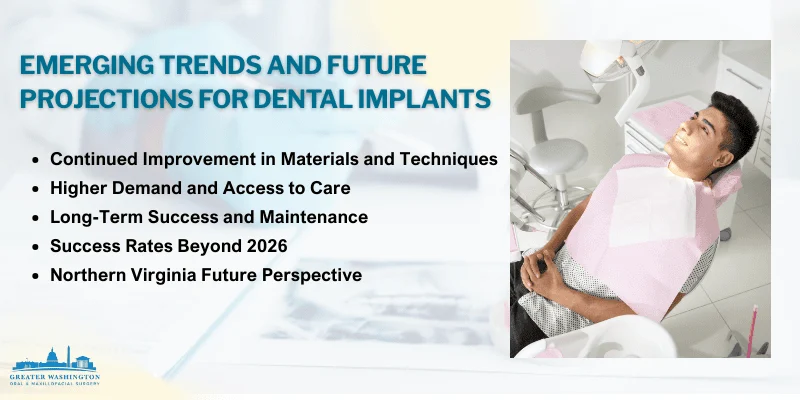
Looking ahead, dental implantology is poised to continue evolving, with implications for both safety and success rates:
- Continued Improvement in Materials and Techniques: Implant success has gradually improved over decades, and this trajectory is likely to continue. For example, advances such as surface modifications (e.g. laser-microtextured implant surfaces) show promise in reducing peri-implant inflammation and improving bone integration. New ceramic implant materials (zirconia implants) are being researched for patients with metal sensitivities, though currently titanium remains the gold standard. Techniques like minimally invasive (flapless) surgery and computer-guided implant placement are becoming more widespread, potentially reducing healing times and surgical complications. In Northern Virginia’s modern clinics, many of these innovations (like 3D cone-beam CT planning) are already in use, and their adoption will only grow.
- Higher Demand and Access to Care: By 2026 and beyond, more dentists (including in general practice) will gain implant training, expanding access. The projections of implant prevalence (up to 23% of adults with missing teeth by 2026) indicate that implants will not be a niche treatment but a common modality. As demand rises, there is also a push to make implants more affordable and accessible. Some policy changes, like Medicaid in Virginia starting to cover limited adult dental benefits, could slightly improve access for underserved populations (though implants are still often considered elective). If more insurance plans begin covering implants, the gap in implant access between higher-income and lower-income groups could narrow. For instance, if Northern Virginia’s insured population has high implant usage now, an expansion of coverage could allow similar outcomes in rural or less affluent communities.
- Long-Term Success and Maintenance: Future research is focusing on how to ensure that an implant that is successful at 5 or 10 years remains healthy at 20+ years. One challenge is managing peri-implantitis as more implants accumulate in the population. Improved oral hygiene products (like specialized implant cleaning devices or antimicrobial coatings on implants) may emerge to combat plaque around implants. Moreover, as noted in a 2024 meta-analysis, the field is recognizing the need for lifelong follow-up; dentists are encouraged to incorporate implants into routine check-ups permanently, rather than treating them as “place-and-forget” devices. This cultural shift toward long-term care can further boost success rates in the future by catching issues early.
- Success Rates Beyond 2026: If current trends hold, we can expect success rates to remain high or even inch higher thanks to early detection of problems and improved protocols. It is not unrealistic to envision future 10-year survival rates in the mid-90% range consistently, and 20-year survival improving as well. One noted projection is that by 2040, with continued improvements, dental implants might routinely last the lifetime of a patient in most cases – essentially a permanent solution barring disease. Already, studies have documented cases of 40-50 year implant longevity, with some literature claiming 95–98% success even over such extended periods for well-maintained implants. While such data are limited, they paint an optimistic picture.
- Northern Virginia Future Perspective: Northern Virginia will likely remain at the forefront of adopting advanced implant techniques. Given the region’s strong healthcare infrastructure, patients can expect to benefit early from cutting-edge developments (such as digital workflows, immediate-load implants that reduce treatment time, or biologic therapies to enhance bone healing). This means Northern Virginia’s outcomes could improve in tandem with national improvements. Additionally, the region’s aging population (many long-time residents reaching retirement age) means a growing pool of individuals who may seek implants – possibly leading to more regional studies or data collection in the future to benchmark success locally.
Start your treatment plan today by completing the new patient form and receiving a customized implant success roadmap from our surgical team.
Conclusion
Dental implants in the United States demonstrate excellent safety and success, with recent studies showing short-term success on the order of 95–99% and long-term (10+ year) survival around 90% or higher.
These outcomes make implants a reliable option for tooth replacement across the general population. Northern Virginia, reflecting a microcosm of the national landscape, enjoys similarly high implant success rates, supported by access to skilled providers and informed patients.
From a safety standpoint, implants are well-tolerated and complications are relatively infrequent. Proper surgical planning and patient selection have minimized serious risks, and ongoing maintenance largely prevents late complications.
General implant safety (not tied to specific conditions) is evidenced by the consensus that dental implants have “among the highest success rates of any surgical implant” device in healthcare.
Failures do occur in a minority of cases, but research and innovation continue to address these through better materials, techniques, and aftercare practices.
In Northern Virginia and beyond, the future of dental implantology looks promising. With growing demand and continual improvements, we expect implants to remain a cornerstone of restorative dentistry.
By 2026 and in the years following, more patients than ever will benefit from the functional and esthetic advantages of implants – enjoying success rates that rival or exceed those of more traditional solutions.
The keys to maintaining these outcomes will be rigorous clinical standards, patient education on implant care, and making sure that the benefits of this technology are accessible to all segments of the population.
Sources:
- American Association of Oral and Maxillofacial Surgeons (AAOMS) – Dental Implants: Long-term Solution to Missing Teeth (2023)
- National Institute of Dental and Craniofacial Research – Oral Health in America: Advances and Challenges (2021)
- Elani et al., J. Dental Research 2018 – Trends in Dental Implant Use in the U.S., 1999–2016, and Projections to 2026
- König et al., Clin Oral Investig 2024 – 20-Year Meta-Analysis of Dental Implant Survival Rates
- Howe et al., Journal of Dentistry 2019 – 10-year Dental Implant Survival Systematic Review
- PEARL Network (practice-based research) – Outcomes of Implants in General Practices
- Frontiers in Dental Medicine 2023 – Literature Review of Implant Survival
- AAID (American Academy of Implant Dentistry) – Patient Fact Sheet on Implant Success
- ADA News / JADA – Reports on implant success in general practices and experimental implants
- Bonita Del Rey study (California, 2025) – Implant Demand Trends (national vs local)