
Missing teeth can affect how you eat, speak, and feel about your smile. Dental implants offer a permanent solution that looks and functions like natural teeth. But not everyone qualifies for this treatment right away.
Good candidates for dental implants typically have sufficient jawbone density, healthy gums without active disease, well-controlled health conditions like diabetes, and do not smoke.
Your overall health plays a major role in whether implants will successfully integrate with your bone. The good news is that even if you face challenges like bone loss or certain medical conditions, modern techniques can often make implants possible for you.
Understanding what makes you a good candidate helps you make informed decisions about your dental health. Factors such as bone density, overall health, and personal habits all determine if this treatment will work for your unique situation.
This guide walks you through the medical and oral health factors that matter most.
Key Takeaways
- Your bone density and gum health must meet minimum requirements for implants to succeed
- Medical conditions like uncontrolled diabetes and smoking significantly reduce implant success rates
- Many patients initially disqualified can become candidates through bone grafting and lifestyle changes
Understanding Dental Implant Candidacy
Dental implants work differently than other tooth replacement options because they replace both the root and crown of missing teeth. Knowing what implants are and who benefits most from them helps you decide if this treatment fits your needs.
What Are Dental Implants?
A dental implant is a small titanium post that a dentist surgically places into your jawbone. This post acts as an artificial tooth root. Over several months, your natural bone cells attach to the titanium in a process called osseointegration.
After the implant fuses with your bone, your dentist attaches an abutment to the post. Then they place a custom-made crown on top that looks and functions like a natural tooth.
Unlike dental bridges or partial dentures, implants don’t rely on your other teeth for support. They stand alone and provide independent support for each replacement tooth.
Who Typically Needs Dental Implants?
You might need dental implants if you’ve lost one or more teeth due to injury, decay, or gum disease. People who have had teeth extracted also commonly consider implants to restore their smile.
Adults of any age can get implants as long as their jawbone has finished growing. There’s no upper age limit for treatment.
You’re likely a good candidate if you want a permanent solution rather than removable options. Many people choose implants when they want to eat, speak, and smile with confidence without worrying about their teeth shifting or falling out.
Benefits Over Other Tooth Replacement Options
Dental implants offer several advantages over traditional tooth replacement methods. They preserve your jawbone because they stimulate it like natural tooth roots, while dental bridges and dentures can lead to bone loss over time.
How long do dental implants last compared to other options? With proper care, implants can last 25 years or longer, while bridges typically need replacement every 10-15 years and dentures every 5-10 years.
Implants also protect your remaining natural teeth. Bridges require grinding down adjacent healthy teeth for support, which permanently damages them. Implants don’t affect neighboring teeth at all.
You can brush and floss implants just like natural teeth, making oral hygiene simpler than with dentures or bridges.
Key Oral Health Requirements
Your mouth needs to be in good shape before you can get dental implants. Strong gums and enough bone in your jaw are the foundation for implants that last, along with your willingness to take care of them every day.
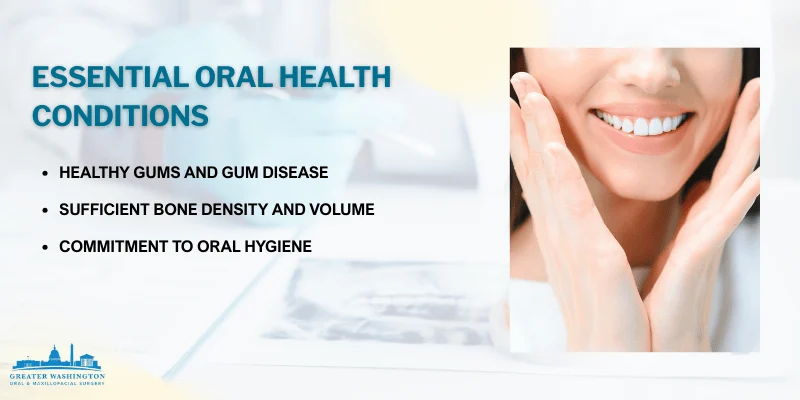
Healthy Gums and Gum Disease
You need healthy gums for dental implants to work. Active gum disease causes inflammation and infection that can make implants fail.
Periodontal disease weakens the tissues that hold implants in place. If you have untreated periodontitis, bacteria can spread to the implant site and prevent proper healing. Your dentist will need to treat any gum disease before placing implants.
Healthy gums are essential because implants depend on gum tissue for long-term success. After you get implants, you can still develop peri-implantitis, which is similar to gum disease but affects the area around the implant. This condition can cause the implant to loosen or fail.
Regular dental check-ups help catch gum problems early. Your dentist will measure pocket depths around your teeth and check for bleeding or swelling.
Sufficient Bone Density and Volume
Your jawbone needs to be thick and tall enough to hold an implant securely. The typical requirements are at least 10mm in height and 5mm in width for standard implants.
Bone loss happens naturally after you lose a tooth. Without a tooth root to stimulate it, your jawbone starts to shrink. This process makes it harder to place implants later. The longer you wait after losing a tooth, the more bone you might lose.
Studies report 11% to 22% loss of ridge height and 29% to 63% loss of ridge width in the first 12 months after extraction, with a large share occurring early.
Adequate bone structure is measured using 3D imaging that shows your exact jawbone density and volume. If you don’t have enough bone, your dentist can often rebuild it through bone grafting procedures. About 85% of patients with bone deficiencies can eventually qualify for implants after these treatments.
Low bone density from conditions like osteoporosis can also affect your candidacy. Your dentist will evaluate whether your bone is strong enough to support the implant during healing.
Commitment to Oral Hygiene
You need to brush and floss properly every day to keep implants healthy. Poor oral hygiene leads to infections that can destroy the bone around your implant.
Dental implants require the same care as natural teeth. You should brush twice daily and floss once a day. Special floss threaders or water flossers help clean around implants effectively.
Good oral hygiene practices directly impact implant success rates. Plaque buildup causes inflammation that can progress to peri-implantitis, potentially leading to implant failure.
You also need to visit your dentist regularly for professional cleanings. These appointments let your dentist check the implant and surrounding tissues for any problems. Most dentists recommend cleanings every six months, though some patients need them more often.
Find out if you are a good implant candidate. Schedule a consultation today.
Medical Factors That Influence Implant Success
Your overall health plays a major role in whether dental implants will work well for you. Certain chronic conditions, medications you take daily, and your age can all affect how your body responds to implant surgery and heals afterward.
Chronic Conditions and Systemic Health
If you have diabetes, keeping your blood sugar under control is critical for implant success. Uncontrolled diabetes increases implant failure risk by 40% because high blood sugar slows down bone healing. Your doctor will want your HbA1c level below 7% before moving forward with the procedure.
Diabetes does not automatically disqualify you, but control matters. A meta-analysis found implant failure risk was higher in patients with diabetes compared with those without (odds ratio 1.777), so your surgeon may coordinate timing and healing protocols around your medical status.
Osteoporosis can also impact your implant candidacy. This bone-weakening disease makes it harder for implants to attach firmly to your jaw. If you take intravenous bisphosphonates for severe osteoporosis, you face a higher risk of osteonecrosis of the jaw, a serious complication where bone tissue dies.
Autoimmune disorders like rheumatoid arthritis and lupus may compromise your results, especially if you take immunosuppressant medications. These conditions can slow healing and reduce your body’s ability to integrate the implant with your jawbone.
Your dentist will work closely with your medical doctor to determine if implants are safe for you.
Heart conditions require careful evaluation before implant surgery. You may need antibiotic prophylaxis to prevent infections that could affect your heart.
Medication Considerations
The medications you take can significantly affect implant complications and healing. Blood thinners like warfarin or newer anticoagulants require careful management around surgery time. Your dentist will coordinate with your doctor to adjust dosing if needed.
Bisphosphonates taken orally for osteoporosis carry less risk than IV forms, but your dentist still needs to know about them. These drugs stay in your system for years and can affect bone healing around implants.
Immunosuppressant drugs, steroids, and chemotherapy medications all slow down healing. If you take these regularly, you may need special protocols before and after surgery to boost your chances of success.
Some medical conditions that affect dental implant candidacy can be managed with proper planning. Your dentist will review your complete medication list during the consultation.
Age and Jaw Growth
Your age matters for implant candidacy, but not in the way you might think. Young people under 18 typically need to wait because their jaw growth hasn’t finished yet. Permanent implants placed too early can end up in the wrong position as your jaw continues developing.
For women, jaw growth usually completes around age 18. Men often need to wait until age 21. Your dentist may use mini implants as temporary solutions if you lose a front tooth during your teen years.
Older adults make excellent candidates for dental implants. There’s no upper age limit as long as your overall health is good. Seniors often have the same high success rates as younger adults when health conditions are optimized.
Lifestyle and Patient Habits
Your daily habits play a major role in whether dental implants will succeed in your mouth. Tobacco use stands as the biggest threat to implant success, while other lifestyle choices affect how well your body heals after surgery.
Non-Smoking Status and Tobacco Use
Smoking creates serious problems for dental implants. Nicotine restricts blood flow to your gums and jawbone, which means less oxygen and fewer nutrients reach the surgical site. This makes it much harder for your bone to fuse with the implant.
Smokers face higher rates of implant failure compared to non-smokers. The restricted blood flow slows down healing and increases your risk of infection. It also interferes with osseointegration, the process where your bone attaches to the titanium post.
Most dental professionals strongly recommend you quit smoking several weeks before your implant surgery. You should also avoid tobacco for several weeks after the procedure. Quitting completely gives you the best chance at long-term success and protects your investment in your oral health.
Lifestyle Choices Affecting Healing
Beyond smoking, other habits affect your healing time and implant success. Your diet, oral hygiene routine, and general health all play major factors in the outcome.
Poor oral hygiene allows bacteria to build up around the implant site. This can lead to infections that threaten the implant. You need to brush and floss regularly to keep the area clean.
Your diet matters too. Eating foods rich in vitamins and protein helps your body heal faster. Avoiding alcohol during the healing period also helps, as it can interfere with bone regeneration and slow recovery.
Advanced Solutions When Oral Conditions Fall Short
Modern dentistry offers multiple ways to make dental implants possible even when your jaw lacks sufficient bone or your oral health needs improvement. Through bone grafting, sinus lifts, and advanced imaging technology, implant specialists can create the right conditions for successful implant placement.
Bone Grafting and Sinus Lift Procedures
If you don’t have enough jawbone to support an implant, bone grafting can rebuild your jaw structure to create a stable foundation.
Your dentist takes bone material from another part of your body, uses donor bone, or applies synthetic bone substitute to the weak area. The graft needs 3-6 months to heal and fuse with your existing bone before implant placement.
A sinus lift becomes necessary when you need implants in your upper jaw but lack sufficient bone height below your sinus cavity.
During this procedure, your implant specialist gently lifts the sinus membrane and adds bone graft material underneath. This creates the minimum 10mm height typically needed for standard implants.
Both procedures have high success rates and allow many patients who were previously told “no” to move forward with dental implant surgery. The healing time adds several months to your treatment, but the results provide a solid base for long-lasting implants.
3D Imaging and Implant Planning
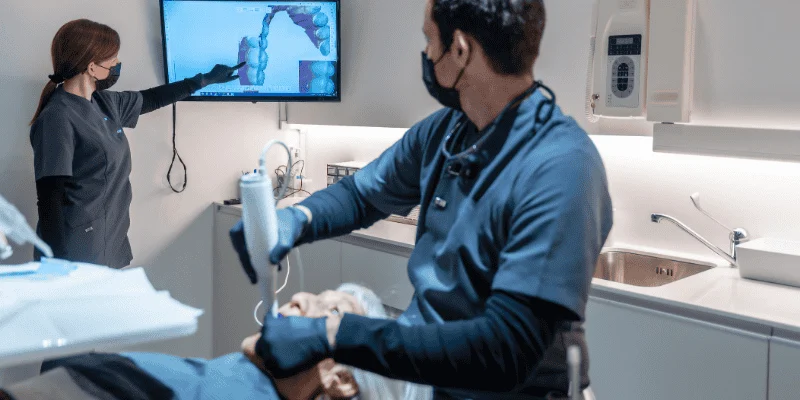
Your dentist uses CBCT scans (cone beam computed tomography) to create detailed 3D images of your jaw, sinuses, and nerves before surgery.
These scans are more precise than traditional x-rays and show exact bone density, height, and width measurements. With this information, your implant specialist can plan the perfect angle, depth, and position for each implant.
Digital implant planning using 3D imaging achieves 95% placement accuracy and helps prevent complications. Your dentist can see potential problems before surgery starts, like nerve pathways to avoid or areas needing bone grafts. CT scans also help determine if you need a sinus lift or other preparatory procedures.
This technology allows your dental team to create surgical guides that direct implant placement with precision during the actual procedure.
Types of Dental Implants and Alternatives
Standard implants aren’t your only option if you face challenges with traditional placement. Mini implants work well when you have limited bone density because they’re narrower than regular implants (less than 3mm wide). They cost less and heal faster but may not support as much chewing force.
The All-on-4 system provides a full arch of teeth using just four strategically placed implants, making it possible even with significant bone loss.
Two implants go in the front of your jaw at a 90-degree angle, while two in the back are angled at 45 degrees to avoid areas with less bone. This approach often eliminates the need for bone grafting entirely.
Short implants (4-6mm long) offer another solution when you have limited vertical bone height. While standard implants are typically 10mm or longer, these shorter versions can succeed in areas where bone grafting isn’t an option or you prefer to avoid additional surgery.
Long-Term Commitment and Realistic Expectations
Dental implants require ongoing care and patience throughout a multi-month process, plus you need to be prepared both emotionally and financially for this investment in your oral health.
Maintaining Implants for Life
Your dental implants can last decades, but only if you commit to taking care of them properly. You need to brush and floss daily, just like you would with natural teeth. Skipping your oral hygiene routine puts your implants at risk for infections.
Regular dental check-ups are essential for monitoring your implants. Your dentist will examine the tissues around each implant to catch any problems early. Without these visits, issues like peri-implantitis can develop and threaten your implant’s stability.
You should follow these daily habits:
- Brush twice a day with a soft-bristled toothbrush
- Floss around each implant carefully
- Use an antimicrobial mouthwash if recommended
- Avoid chewing on hard objects like ice or pens
Poor oral hygiene leads to infections that damage the bone supporting your implant. The commitment to maintaining dental implants separates successful outcomes from failures.
Understanding the Dental Implant Journey
The process to restore your smile takes several months from start to finish. After your dentist places the implant post into your jawbone, you’ll wait for osseointegration to occur. This is when the implant fuses with your bone tissue.
Healing time varies from person to person. Most patients need three to six months for the implant to fully integrate before the final crown gets attached. You can’t rush this process.
Your treatment involves multiple stages:
- Initial consultation and planning
- Implant placement surgery
- Healing period for osseointegration
- Abutment placement
- Final crown attachment
You won’t have immediate results after tooth loss. Being a good candidate means having realistic expectations about how long the entire journey takes. Patience during each stage leads to better outcomes.
Emotional and Financial Readiness
You need to prepare yourself mentally for the commitment ahead. Some people feel anxious about the surgery or frustrated with the waiting period. Understanding what to expect helps you stay calm throughout treatment.
The cost of dental implants represents a significant investment. A single dental implant typically costs several thousand dollars. Financial readiness for implant treatment means planning for these expenses before you start.
Consider these financial factors:
- Initial consultation fees
- Imaging and diagnostic costs
- Surgical placement fees
- Crown and abutment costs
- Possible bone grafting expenses
Many dental offices offer payment plans to make treatment more affordable. You should discuss all costs upfront so there are no surprises. Your investment pays off with a permanent solution that looks and functions like a natural tooth for many years to come.
Frequently Asked Questions
Getting dental implants is a big decision that depends on your overall health, bone structure, and daily habits. Understanding which medical conditions and lifestyle choices affect implant success can help you determine if you’re ready for this treatment.
What are the common health considerations for dental implant candidacy?
Your overall health plays a major role in whether dental implants will work for you. Conditions like uncontrolled diabetes can slow down healing and reduce the chance of success because high blood sugar affects how your body repairs tissue.
If you have osteoporosis, your dentist will need to know what medications you’re taking. Some drugs used to treat bone loss can increase the risk of complications during healing.
Autoimmune disorders like rheumatoid arthritis or lupus may also affect your candidacy. These conditions can weaken your immune system, especially if you’re taking immunosuppressant medications.
Your dentist will review your complete medical history during your consultation. They’ll work with your other doctors if needed to make sure implants are safe for you.
How does jawbone density impact your suitability for dental implants?
Your jawbone needs to be strong enough to hold the implant in place. Adequate bone structure typically requires at least 10mm in height and 5mm in width in the lower jaw.
When you lose a tooth, the bone in that area starts to shrink over time. If you’ve been missing teeth for years, you might not have enough bone left to support an implant without additional procedures.
Your dentist will use 3D imaging to measure your bone density and volume. This scan shows exactly how much bone you have and where it’s located.
If your bone is too thin or short, bone grafting can often solve the problem. This procedure adds bone material to rebuild the area before placing the implant. About 85% of patients with initial bone deficiencies can eventually qualify for implants after targeted treatments.
Can gum health affect the success of dental implants?
Healthy gums are essential for dental implant success. If you have active gum disease, your dentist will need to treat it before placing any implants.
Gum disease causes inflammation and infection in the tissue around your teeth. This same bacteria can attack the area around an implant and cause it to fail.
Your gums need to be free from infection and inflammation at the time of surgery. They also need to stay healthy afterward to protect the implant long-term.
If you’ve had periodontal disease in the past, you’ll need to show that you can maintain good oral hygiene. Proper oral hygiene habits are critical factors in determining your eligibility for implants.
What role does age play in determining if dental implants are right for you?
Age itself doesn’t prevent you from getting dental implants. Your overall health matters much more than the number on your birthday cake.
Young adults under 18 usually need to wait until their jaw has finished growing. This typically happens around age 18 for women and 21 for men. Placing implants too early can cause problems as the jaw continues to develop.
Older adults in their 70s and 80s can be excellent candidates if they’re in good health. Senior patients have the same high success rates as younger adults when health is optimized.
Your dentist will focus on your bone quality, gum health, and medical conditions rather than your age. Many seniors actually prefer implants because they work better than dentures for eating and speaking.
Are there any chronic conditions that could prevent someone from getting dental implants?
Several chronic conditions can make dental implants more challenging but not always impossible.
Uncontrolled diabetes with HbA1c levels above 8% significantly increases the risk of implant failure.
If you’ve had radiation therapy to your head or neck, the treatment may have damaged your jawbone. You might need special procedures before getting implants to help the bone heal properly.
Certain bleeding disorders can make the surgery risky because they affect how your blood clots. Your dentist will need clearance from your medical doctor before proceeding.
Some medications also create challenges. If you take intravenous bisphosphonates for severe osteoporosis, you may face a higher risk of jawbone problems after implant surgery.
Modern techniques and preparatory procedures have made it possible for many people who might have been denied implants in the past to now enjoy their benefits. Your dentist can often work around these conditions with proper planning and coordination with your medical team.
Do lifestyle factors, such as smoking, influence dental implant compatibility?
Smoking is one of the biggest lifestyle factors that affects implant success. If you smoke, your risk of implant failure is two to three times higher than non-smokers.
Cigarettes reduce blood flow to your gums and bones. This means less oxygen and nutrients reach the implant site, which slows healing and makes infection more likely.
Most dentists require you to stop smoking for at least four weeks before surgery and eight weeks after. Some won’t place implants at all unless you quit completely.
Heavy alcohol consumption also affects healing and bone health. Your body needs good nutrition to integrate the implant with your jawbone.
If you grind your teeth at night, you’ll probably need to wear a night guard. Grinding puts too much pressure on implants and can cause them to fail over time. Non-smokers with proper oral hygiene have three times higher success rates compared to smokers.