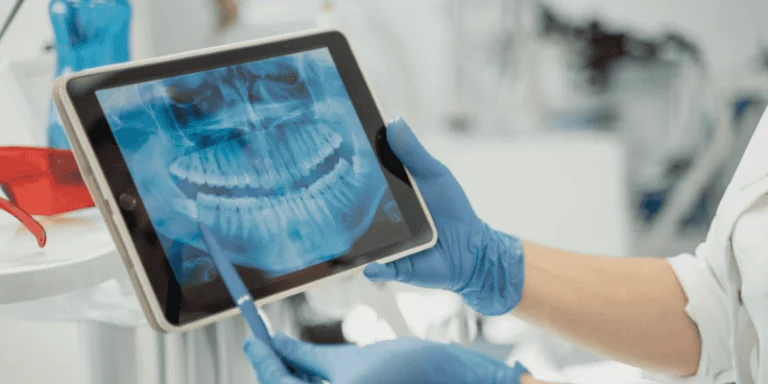


When your jawbone isn’t strong or thick enough to hold a dental implant, a bone graft may be necessary to build it up first. Bone grafting helps create a solid base so your dental implant stays stable and lasts a long time.
Without enough bone, implants can fail or cause other problems, so this step is often important for a successful outcome. You might need a bone graft if you have lost bone due to tooth loss, injury, or gum disease.
Your dentist will check your jaw carefully using scans to see if a graft is needed. Sometimes the graft and implant can be done at the same time, but if more bone is needed, you may wait a few months before getting the implant.
Key Takeaways
- Bone grafting builds up your jawbone to support dental implants.
- Your dentist uses scans and exams to decide if you need a graft.
- The timing between grafting and implant placement depends on bone health.
Expert Jaw Bone Grafting Before Implants Available in the Greater Washington Area
Why Bone Grafting May Be Needed Before Dental Implants
Before dental implants can be placed, your jawbone must be strong and thick enough to hold them securely. If your bone is weak or too thin, a bone graft can help rebuild it.
This process improves your chances for a stable implant that lasts. When you lose a tooth, your jawbone starts to shrink in that area because it no longer gets used.
This is called bone resorption. Over time, the bone may become too thin or soft to support a dental implant.
Up to 25% of jawbone width is lost within the first year after tooth extraction if no preservation is done.
Without enough bone, the implant won’t stay stable, increasing the chance it could fail. Bone loss can also change your facial structure, causing your cheeks or jaw to look sunken.
This affects how your implants fit and how natural they look. Bone grafting adds new material to the jaw, helping restore lost volume and making implant placement safer and stronger.
Certain problems can lead to more serious bone loss, making a graft necessary. If you’ve had missing teeth for several months or years, your jawbone may have shrunk too much.
Gum disease, especially advanced periodontal disease, damages bone around teeth and can cause it to disappear. Jaw injuries, infections, or tooth extractions done long ago also weaken your bone.
If you currently wear dentures, they don’t stop bone loss and may contribute to it. In all these cases, a bone graft can rebuild the jaw so your implants have a firm foundation.
Your jawbone’s quality and size directly affect how well dental implants connect with your body. Implants rely on osseointegration, where the bone grows tightly around the titanium posts, locking them in place.
If your jaw isn’t dense or wide enough, this process can fail. Strong jawbone also helps implants handle daily biting and chewing forces.
Without a solid structure, implants can loosen or cause pain. Bone grafting restores bone health and keeps your oral structure balanced.
This supports both your dental implants and your overall facial shape.
Schedule a Bone Grafting & Implant Consultation in Fairfax, Manassas, Stafford, or Fredericksburg
How Dentists Determine If Bone Grafting Is Necessary
To find out if you need a bone graft, your dentist looks closely at your jaw’s size, shape, and strength. This helps them see if there is enough healthy bone to hold an implant.
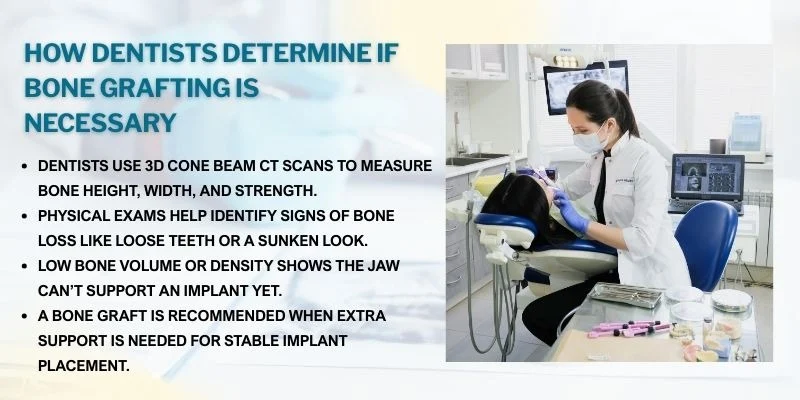
They use tools and tests to check your bone’s condition and decide the best way to prepare your mouth. Your dentist will usually start by taking detailed images of your jaw.
One common tool is a cone beam CT scan, which gives a 3D view of your bone structure. This lets them see the exact shape and thickness of your jawbone from all angles.
These scans are more detailed than regular X-rays and show how much bone you have left after tooth extraction or bone loss. The images help spot areas where your jawbone might be too thin or weak.
Sometimes, your dentist will also check your mouth in person to feel the bone and evaluate if the jaw looks healthy. You might not notice bone loss at first, but some signs can hint that your jawbone is weak.
These include loose teeth, a sunken look in your cheeks, or changes in how your dentures fit. Pain or discomfort around the gums may also occur if the bone is damaged.
Bone loss often happens after a tooth extraction if the space wasn’t protected by socket preservation. If you have gum disease or have worn dentures for many years, bone deficiency is more likely.
Approximately 40–60% of dental implant patients require some form of bone grafting.
Bone volume is about how much bone you have, while bone density means how strong and solid the bone is. Both are important for dental implants to stay in place.
Your dentist measures these using the cone beam CT scan results. If the bone volume is low or the density is poor, a bone graft might be needed to build up your jaw.
This process helps create a sturdy base for the implant, so it doesn’t fail or move. Using advanced 3D imaging, your dentist can plan exactly where to place the graft and implant for the best fit.
Do You Need Bone Grafting Before Dental Implants? Get Answers Today
Types of Bone Grafts and Bone Grafting Procedures
When you need a bone graft before dental implants, there are different materials and techniques your dentist might use. Each type serves a specific purpose in helping your jawbone grow stronger and wider.
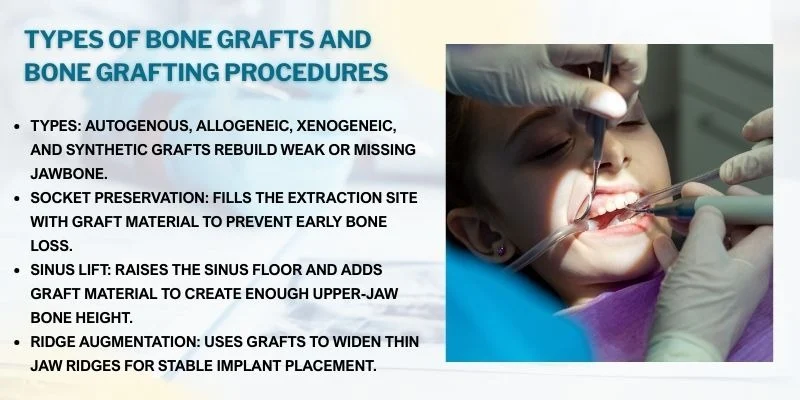
The right choice depends on your bone loss, where it is, and your overall dental health. You’ll hear about four main types of bone grafts.
Autogenous grafts use bone taken from your own body; often from your chin or hip. Because it is your own bone, it helps bone growth faster and is less likely to face rejection.
Allogeneic grafts come from donated human bone, which is specially processed for safety. They help fill larger gaps but take a bit longer to integrate.
Xenogeneic grafts use bone from animals, typically cows, and are also processed to be safe. These act as a scaffold, helping your body grow new bone over time without direct bone cells.
Finally, synthetic grafts are made of materials like calcium phosphate. These man-made options are good if you want to avoid donor tissue, and they encourage bone regeneration by providing a framework for your body to build new bone.
After a tooth is extracted, socket preservation helps keep the bone where the tooth once was. Without this step, the jawbone can shrink quickly, which makes implant placement harder later.
During the socket preservation procedure, your dentist fills the empty tooth socket with bone graft material. This stops the bone from collapsing and promotes new bone growth.
A protective membrane may be placed over the graft to keep tissue from growing into the area too soon. This procedure is simple and can prevent the need for larger grafts later.
It helps keep your jawbone’s shape and volume, especially in the first few months after extraction. If you are getting implants in your upper jaw, especially back teeth near the sinuses, there might not be enough bone because the sinus cavity sits close to this area.
A sinus lift lifts the sinus membrane upward to create space, then fills it with bone grafting material. This extra bone provides the height your implant needs to attach securely.
Because the natural bone is often thin there, sinus lifts are important for implant dentistry in the maxilla area. The grafted bone will fuse with your existing bone over several months, making implants more stable and lasting.
Your jaw ridge is the curved bone where teeth sit. Sometimes this ridge becomes too thin to place implants safely.
Ridge augmentation rebuilds the width and shape of the ridge using bone grafts. Your dentist places graft material along the narrow ridge and covers it with a protective membrane.
This shield encourages bone regeneration and keeps the graft intact during healing. This bone grafting procedure makes sure you have a strong, wide base for your implants.
It’s especially useful if you’ve lost bone after extractions or trauma. Healing can take a few months before implants are placed.
Step-by-Step Journey: From Bone Grafting to Dental Implant Placement
Before your dental implant can be placed, there are several important steps that prepare your jaw and ensure the best chance for success. This process includes careful planning, healing after surgery, and timing the implant placement just right.
First, your dentist will evaluate your jawbone using X-rays or 3D scans to check the bone’s density and shape. This helps decide if a bone graft is needed to give your implant a strong foundation.
You’ll discuss the best type of graft material for your needs; this could be your own bone, donor bone, or synthetic options. On surgery day, you’ll receive local anesthesia to keep you comfortable.
The surgeon will make a small cut in your gums to expose the area and then place the bone graft material. The graft is carefully secured to help new bone start growing.
After the graft is in place, the site is closed with stitches, and you’ll get instructions on care and preventing infection. After your surgery, healing begins right away.
Your body will slowly replace the graft material with new bone, a process called bone regeneration. This can take several months, usually between 3 to 9 months, depending on the graft size and your body’s healing ability.
During this time, it’s crucial you follow post-op care tips: avoid disturbing the surgical site, eat soft foods, and use any prescribed medication like antibiotics or pain relievers. Swelling and discomfort are normal at first but should improve with time.
Regular follow-up visits will let your dentist monitor how well the bone is growing to support future implants. Once your bone has fully healed and grown strong, you’re ready for the next step: dental implant placement.
This usually happens around 3 to 6 months after the bone graft surgery but can vary based on your unique healing progress. During implant surgery, a titanium post is inserted into your jawbone.
This post acts as the implant’s root, providing a strong anchor for your new tooth. Over the next few months, the implant fuses with your bone, a process called osseointegration, which is key to implant success and long-term stability.
Your dentist will then place an abutment and finally the replacement crown or denture, completing your smile restoration.
Risks, Considerations, and Alternatives to Bone Grafting
Bone grafting is a key step for many dental implants, but it does come with some risks and important factors to think about. You should also know that in certain cases, bone grafting might not be the only option to support an implant.
Bone grafting can cause mild swelling, bruising, or soreness after surgery. Infection or graft rejection is rare but possible.
To lower your risk, follow your dentist’s care instructions closely. Keeping good oral hygiene and avoiding smoking helps your bone heal better.
Sometimes the graft may not fully integrate, leading to implant instability later. Using barrier membranes during surgery can protect the graft and improve bone growth.
Advanced imaging before surgery helps your dentist place the graft accurately. If any issues arise, prompt follow-up care can prevent bigger problems.
Factors Influencing Success Rates
Your overall health plays a big role. Conditions like diabetes or immune disorders can slow healing.
Healthy bone tissue and good blood flow are crucial for the implant to fuse tightly with the bone. Bone graft types vary too; autogenous grafts (from your own body) usually have the best integration but need extra surgery.
The volume and quality of your existing jawbone matter. If the bone around the implant site is dense and well-formed, your chances of success are higher.
The skill of your dental surgeon and the use of modern planning tools like 3D scans also make a difference in stable, long-lasting implants.
When Bone Grafting May Not Be Required
If your bone loss is minor, alternative implant methods might work without a bone graft. Options like short implants or narrow implants fit into smaller bone spaces.
Sometimes your dentist may recommend delaying implant placement to let your bone regenerate naturally. Newer techniques, such as zygomatic implants or All-on-4 systems, anchor implants in stronger areas of your jaw to avoid grafting.
These options depend on detailed evaluation of your bone condition and overall health. Discuss all possibilities with your dentist to find what suits your needs best.
Frequently Asked Questions
Knowing how to spot problems early and understanding the healing process will help you prepare better for bone grafting and dental implants. Recovery times and the need for a graft depend on your jaw’s condition and your treatment plan.
What are the signs that indicate a bone graft has failed after dental surgery?
If you notice increased pain, swelling that worsens instead of improving, or any unusual discharge like pus, these could be signs of graft failure. Loose graft material or a loose implant afterward may also signal problems.
Always contact your oral surgeon if you experience persistent discomfort or if the surgical site isn’t healing as expected.
Can you explain the typical healing stages for a dental bone graft procedure?
Healing usually starts with swelling and mild discomfort that lasts a few days. Next, your body will begin growing new bone cells into the graft, which can take several months.
Most bone grafts heal between three to six months before implants can be safely placed.
How can patients potentially speed up the recovery process following a bone graft?
You can help speed recovery by following your surgeon’s care instructions closely. This includes avoiding heavy exercise, eating soft foods, and keeping the surgical area clean.
Avoid smoking and alcohol, as they can slow down healing and increase risks of complications.
What is the window of time recommended between having a bone graft and placing a dental implant?
Most surgeons recommend waiting between three and six months after a bone graft before placing the dental implant. This allows enough time for the new bone to heal and become strong enough to support the implant.
In some cases, immediate implantation is possible, but only when your jaw bone quality supports it.
What factors determine whether or not a bone graft is necessary when considering dental implants?
The need for a bone graft depends on how much healthy jawbone you have. If you have lost bone due to tooth extraction, gum disease, or injury, you might need grafting.
Your dentist will use X-rays or scans to check bone density and decide if grafting will improve implant success.
Could you please itemize the expected costs for dental implants including the additional expense of bone grafting?
Dental implant costs vary but often range from $1,000 to $3,000 per implant.
A bone graft can add between $800 and $2,500 depending on the procedure’s complexity.
Additional costs may include exams, imaging, and anesthesia.