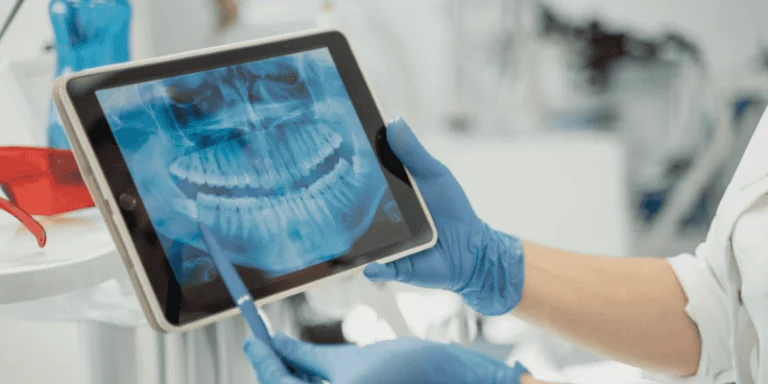


If you’ve been told you don’t have enough bone in your upper jaw for regular dental implants, you might feel like your options are limited.
Many people with severe bone loss in the upper jaw assume they’ll need lengthy bone grafting procedures or have to live with uncomfortable dentures. However, zygomatic implants anchor directly into the cheekbone rather than the jawbone, offering a solution when traditional implants won’t work.
Zygomatic dental implants are recommended for patients with severe maxillary bone loss who cannot receive conventional implants, eliminating the need for bone grafting in most cases.
These specialized implants work by placing longer posts into the dense zygomatic bone, which remains strong even when the jaw has deteriorated. This approach can often provide you with fixed teeth in a single day, dramatically reducing treatment time compared to traditional methods.
Understanding when these implants are your best option can help you make an informed decision about your dental health.
You’ll learn about the specific conditions that make zygomatic implants necessary, what the procedure involves, and whether you’re a good candidate for this advanced solution for severe maxillary bone loss.
Key Takeaways
- Zygomatic implants anchor into your cheekbone instead of your jawbone, making them ideal when you have severe upper jaw bone loss
- These implants often eliminate the need for bone grafting procedures and can provide immediate fixed teeth on the same day as surgery
- Success rates exceed 95% when proper patient selection and surgical technique are used
What Are Zygomatic Dental Implants?
Zygomatic implants are a specialized form of dental implant technology that anchors into your cheekbone rather than your jawbone. They provide a stable foundation for prosthetic teeth when severe bone loss makes traditional options impossible.
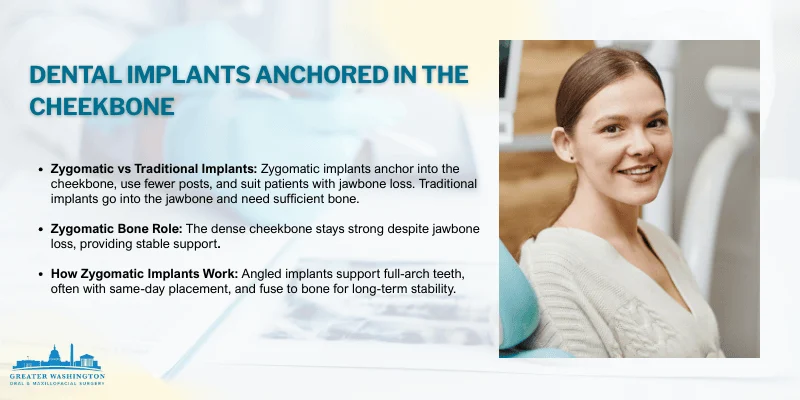
Difference Between Zygomatic and Traditional Dental Implants
Traditional dental implants are shorter posts that your dentist places directly into your upper or lower jawbone. They typically measure 10 to 15 millimeters in length and need adequate bone height and density to stay secure.
Zygomatic implants are much longer, usually 30 to 55 millimeters. Instead of relying on your jawbone, these implants anchor into the zygomatic bone, which is denser and more stable.
The placement process differs significantly between the two. With traditional implants, your dentist drills into the jaw and inserts the implant vertically. With zygomatic implants, the surgeon angles the implant through your upper jaw and into your cheekbone at a specific trajectory.
Key differences include:
- Length: Zygomatic implants are 2-3 times longer than traditional implants
- Anchor point: Cheekbone versus jawbone
- Bone requirements: Zygomatic implants work when you don’t have enough jawbone
- Surgery complexity: Zygomatic procedures require more specialized training in implant dentistry
- Number needed: You often need fewer zygomatic implants to support a full denture
The Role of the Zygomatic Bone and Cheekbone
Your zygoma, commonly called the cheekbone, is one of the strongest bones in your face. It sits on either side of your skull and forms the prominent area under your eyes.
The zygomatic bone remains dense and stable even when your jawbone has deteriorated from tooth loss, gum disease, or aging. This makes it an ideal anchor point for dental implants when your jaw can’t support them anymore.
When you lose teeth and don’t replace them, your jawbone starts to shrink through a process called resorption. Your cheekbone doesn’t experience this same bone loss because it serves different functions in your skull structure.
The zygoma can handle significant force from chewing because of its natural strength. This is why zygomatic dental implants offer a robust solution for people with severe bone deficiency in their upper jaw.
How Zygomatic Implants Work as a Tooth Replacement Solution
Zygomatic implants provide immediate stability for your prosthetic teeth without requiring bone grafting procedures. Your surgeon places them at an angle through your maxilla (upper jaw) and into your cheekbone during one surgical appointment.
The procedure typically uses 2 to 4 zygomatic implants to support a full arch of replacement teeth. You might receive your temporary prosthetic teeth on the same day as surgery, allowing you to eat and smile right away.
Over the following months, your zygomatic bone fuses with the implant surface through a process called osseointegration. This creates a permanent bond that can last decades with proper care.
This advanced solution helps patients who were previously told they couldn’t get dental implants. The technique works especially well for people who have worn dentures for years and lost significant jaw bone as a result.
The implants support fixed prosthetic teeth that don’t slip or move like traditional dentures. This gives you better chewing ability and confidence in social situations.
Talk with a Virginia oral surgery team about when to choose zygomatic implants.
When and Why Zygomatic Implants Are Recommended
Zygomatic implants become necessary when your upper jaw lacks the bone structure needed for traditional implants. These specialized implants anchor into your cheekbone instead of your jaw, making them ideal for severe bone loss situations and helping you avoid bone graft procedures.
Upper Jaw Bone Loss and Insufficient Jawbone
When you’ve been missing teeth for years, your upper jaw bone naturally shrinks away. This bone loss makes it impossible to place regular dental implants because there’s not enough bone to hold them.
Your jawbone density decreases over time without teeth to stimulate it. The bone in your upper jaw can resorb so much that only a thin layer remains. This is especially common in the back areas of your upper jaw.
Traditional implants need at least a certain height and width of bone to work properly. If you don’t have this, zygomatic implants offer a solution by using your cheekbone instead. Your cheekbone is much denser and doesn’t resorb like jaw bone does.
Dentists measure your available bone using special CT scans. These scans show exactly how much bone you have left and whether zygomatic implants are your best option.
Failed Traditional Implants and Bone Grafting Alternatives
Sometimes you might have already tried bone grafting to rebuild your jaw, but the graft didn’t work. Bone grafts can fail because of infection, poor healing, or your body rejecting the graft material.
When bone grafting fails, you face a difficult choice about what to do next. Another bone graft might fail again, and the process takes months of healing time. Zygomatic implants eliminate the need for grafting entirely.
You might also have traditional implants that failed because your bone continued to deteriorate. Failed traditional implants leave you with even less bone than before. Zygomatic implants can work even after these failures because they don’t rely on your jaw bone at all.
The procedure helps you avoid bone graft surgery and the long waiting periods that come with it. This means you can get your teeth replaced faster without multiple surgeries.
Severe Bone Loss Cases and Sinus Lift Avoidance
Your maxillary sinus sits right above your upper jaw teeth. When you have severe bone loss, this sinus cavity expands and takes up most of the space where bone used to be.
Traditional implants in this area would need a sinus lift procedure first. A sinus lift raises the sinus membrane and adds bone underneath it. But when your bone loss is extreme, sinus lifts may not be possible or predictable.
Zygomatic implants bypass your maxillary sinus completely by anchoring higher up in your cheekbone. This approach works even when your sinus cavity is very large or your upper jaw bone loss is extensive.
Key situations where zygomatic implants help you avoid sinus lifts:
- Severe pneumatization of the sinus (when it’s very enlarged)
- Extremely thin bone between your sinus and mouth
- Previous sinus lift failures
- Multiple missing teeth with advanced bone loss
The procedure gives you a stable foundation for replacement teeth without touching your sinus at all.
Learn if zygomatic implants can restore your smile without bone grafting.
The Zygomatic Implant Placement Procedure
The zygomatic implant procedure involves detailed planning using 3D imaging technology and a surgical approach that anchors implants into your cheekbone rather than your jaw.
You’ll work with specialized surgeons who use either sedation or general anesthesia, and in many cases, you can receive temporary teeth within days of surgery.
Assessment and Treatment Planning
Your oral and maxillofacial surgeon will start with a CBCT scan to create a detailed 3D image of your jaw and cheekbone. This scan shows the density of your zygomatic bone, the position of your sinuses, and how close the implants will be to other facial structures.
The implant specialist uses digital planning software to map out the exact angle and length of each implant before surgery. Your treatment plan typically includes two to four zygomatic implants, often combined with standard implants in the front of your mouth where bone is usually more available.
Your implant dentist will also evaluate your overall health and any medications you take. Conditions like uncontrolled diabetes or heavy smoking may affect healing, so these factors become part of your personalized treatment plan.
Step-By-Step Zygomatic Implant Surgery
The surgical approach for zygomatic implants begins with an incision along your gum line to expose the bone. Your oral surgeon makes a small opening in your upper jaw, typically in the area where your premolar or canine teeth once were.
The surgeon then drills at a 45 to 60-degree angle through your maxillary sinus toward your cheekbone. This path allows the implant to anchor in the dense zygomatic bone, which provides strong support. The implants themselves range from 30mm to 55mm in length, much longer than traditional dental implants.
Your surgeon places each implant with high primary stability, usually achieving a torque of at least 35 Ncm. This tight fit is what allows for immediate loading in most cases. The procedure can involve placing implants through the sinus cavity or along its outer wall, depending on your anatomy.
Anesthesia and Comfort Measures
You’ll receive either IV sedation or general anesthesia during zygomatic implant surgery, depending on the complexity of your case and your comfort level. General anesthesia puts you completely to sleep, while IV sedation keeps you relaxed but somewhat aware.
Local anesthesia is also used to numb the surgical area completely. This combination ensures you feel no pain during the implant placement process. The anesthesia team monitors your vital signs throughout the entire procedure.
Most patients report minimal discomfort during recovery when they follow their prescribed pain management plan. Your oral surgeon will provide medications to manage any post-operative pain effectively.
Prosthetic Teeth Attachment
You can often receive a fixed provisional prosthesis within 24 to 72 hours after your dental implant surgery. This temporary set of teeth is screw-retained and designed to stay in place while your implants heal.
The provisional prosthesis connects all your implants together with a rigid framework. This design helps distribute biting forces evenly and protects the healing implants. You’ll need to follow a modified diet during the initial healing period, but you won’t leave without teeth.
Your final prosthesis is typically placed four to six months after surgery, once osseointegration is confirmed. The permanent teeth are custom-made to match your facial features and bite pattern, giving you a natural-looking smile that functions like real teeth.
Benefits and Long-Term Success of Zygomatic Dental Implants
Zygomatic dental implants provide remarkable advantages through their unique placement in dense cheekbone, offering immediate function and impressive longevity that often exceeds traditional implant options.

Strength and Stability Compared to Regular Dental Implants
Zygomatic dental implants anchor into your cheekbone rather than your jaw. This placement gives them exceptional strength because the zygomatic bone is denser and more stable than typical jaw bone.
The osseointegration process works extremely well with zygomatic implants. Your bone naturally fuses with the titanium implant over time, creating a permanent bond. This fusion typically completes within a few months, though your implants function immediately after placement.
Regular dental implants can fail when your jaw bone isn’t thick or strong enough. Zygomatic implants avoid this problem entirely by using bone that rarely experiences deterioration. Your cheekbone maintains its density even after years of tooth loss.
Studies show that zygomatic implants achieve a survival rate of 96.2% at 6 years. This matches or exceeds the performance of conventional implants placed in grafted bone.
Same-Day Teeth and Faster Recovery Time
You can receive same-day teeth with zygomatic implants. Your dentist attaches a temporary dental bridge or full arch restoration during the same appointment as your implant placement.
The recovery time for zygomatic implants is shorter than traditional approaches. You avoid bone grafting procedures that require 6-12 months of healing before implant placement. Instead, you walk out with functional teeth on day one.
Most patients return to normal activities within a few days. Swelling and discomfort typically peak around day three and improve steadily afterward. Your soft diet period usually lasts 2-3 weeks while your gums heal around the dental restorations.
The immediate loading capability means you don’t spend months without teeth. Research indicates that immediate loading protocols show a 98.1% survival rate compared to 95% for delayed loading.
Durability and How Long Zygomatic Implants Last
How long do zygomatic implants last? With proper care, your zygomatic implants can function for decades. Success rates often exceed 95% over many years, matching the longevity of traditional implants.
Your implants’ durability depends on maintaining good oral hygiene. Regular brushing, flossing around your dental bridge, and professional cleanings protect your investment. The implants themselves don’t decay, but the surrounding tissue needs attention.
The annual failure rate sits at just 0.7%, meaning 99.3% of zygomatic implants continue functioning each year. Your prosthetic teeth may need replacement or adjustment over time, but the implants themselves remain stable.
Patient satisfaction remains high with zygomatic implant treatment. You gain permanent teeth that look natural and function like your original teeth, without the hassle of removable dentures.
Risks, Safety, and Suitability Considerations
Zygomatic implants have a strong safety profile with a 98% success rate, but they require careful patient selection and an experienced surgical team. Understanding the potential risks and finding the right specialist helps you make an informed decision about this advanced dental procedure.
Are Zygomatic Implants Safe?
Zygomatic implants are considered safe when placed by experienced professionals. Recent studies show these implants achieve a cumulative survival rate of 98.16% over an average follow-up period of 3.5 years.
The safety of your procedure depends on several factors. Your surgeon’s experience plays a major role in outcomes. The surgical technique used also matters significantly.
Research shows that certain approaches improve safety and success. The Chow technique with the Bichat fat pad positively impacts both implant survival and success rates. This method helps protect the implant site and promotes better healing.
Your overall health status affects safety too. Smoking negatively impacts outcomes and increases your risk of complications. Fresh socket implantation (placing implants immediately after tooth extraction) carries higher risks compared to healed sites.
Potential Complications and Implant Failure
While implant failure rates remain low, you should understand the possible complications. Sinusitis is the most common risk associated with zygomatic implants because they pass through or near your sinus cavity.
Common complications include:
- Sinus reactions and inflammation
- Peri-implant soft tissue problems
- Temporary swelling and discomfort
- Infection at the surgical site
In one study of 217 zygomatic implants, only four implants failed in three patients. One case involved a zygomatic bone fracture. Two additional cases showed implants that initially lost stability but later achieved delayed osseointegration.
Twenty-one patients experienced sinus reactions beyond the four failures. Twenty-eight cases involved peri-implant inflammatory reactions. These numbers show that while complications can occur, severe injuries remain rare.
Your oral hygiene practices directly impact long-term success. Poor cleaning around your implants increases infection risk and can lead to implant failure.
Who Should Perform Zygomatic Implant Surgery
You need a highly trained specialist for zygomatic implant surgery. An oral and maxillofacial surgeon with specific training in zygomatic techniques should perform your procedure.
Not every implant dentist has the expertise for this complex surgery. Your surgeon should have completed specialized training beyond standard implant placement. Limited surgeon experience negatively affects outcomes according to recent research.
Look for an oral surgeon or implant specialist who regularly performs zygomatic procedures. Ask about their success rates and how many zygomatic cases they’ve completed. Experience matters significantly for this advanced technique.
Your surgical team should use advanced imaging and digital planning. This technology helps ensure precise placement in your cheekbone while avoiding vital structures like nerves and sinuses.
Comparing Candidacy: Zygomatic vs. Regular Dental Implants
Regular dental implants work best when you have sufficient jawbone density and height. You’re a candidate for traditional implants if you have healthy bone structure in your upper jaw.
You might need zygomatic implants instead if you have:
- Severe upper jawbone loss or atrophy
- Failed previous bone grafting procedures
- Insufficient bone for traditional implants
- Medical conditions that prevent bone grafting
Zygomatic implants anchor in your cheekbone rather than your jaw. This makes them suitable even when your maxillary bone cannot support regular implants. You can often get immediate loading, meaning your new teeth attach right away instead of waiting months for healing.
Traditional implants require adequate bone volume and good overall oral health. If you don’t meet these requirements, your implant specialist may recommend zygomatic implants as an alternative.
This option eliminates the need for extensive bone grafting procedures that can take six months or longer before implant placement.
Cost, Insurance, and Choosing the Right Specialist
Zygomatic implants require a larger financial investment than traditional implants, but understanding your costs, insurance options, and how to select an experienced specialist helps you make an informed decision about your treatment.
Cost of Zygomatic Dental Implants vs. Traditional Options
The cost of zygomatic dental implants typically ranges from $3,000 to $6,000 per implant. For a full arch restoration using zygomatic implants, you can expect to pay between $15,000 and $50,000 depending on your case complexity and location.
Traditional implants cost less per unit at $1,500 to $3,000 each. However, if you need bone grafting before traditional implants, your total costs can reach $20,000 to $60,000 and take 12 to 18 months to complete.
Zygomatic implants offer better value when you factor in the shorter treatment time and elimination of bone grafting procedures. You avoid multiple surgeries, extended healing periods, and the additional costs that come with them.
Some practices offer flat rates. For example, certain centers charge around $2,000 per zygomatic implant regardless of case complexity, while average total costs run between $32,000 and $36,000 including surgery, temporary teeth, follow-up visits, and final restorations.
Dental Insurance and Financing
Most dental insurance plans provide limited coverage for implant procedures. Your annual maximum typically ranges from $1,000 to $2,500, which covers only a small portion of zygomatic implant costs.
Medical insurance may offer better coverage when your bone loss resulted from trauma, cancer, or other medical conditions. You’ll need pre-authorization and documentation from your surgeon showing medical necessity. When approved, medical insurance typically covers 50% to 80% of surgical costs.
Many practices offer financing options to make treatment more affordable:
- In-office payment plans with 0% interest for 6 to 24 months
- Healthcare credit cards like CareCredit with promotional financing
- Third-party lenders offering terms up to 84 months
- HSA and FSA accounts using pre-tax dollars
You should also consider splitting costs across two benefit years to maximize your insurance coverage.
Factors for Choosing an Implant Dentist or Center
Your surgeon’s experience directly impacts your treatment success and outcome. Look for a board-certified oral surgeon who has completed specific training in zygomatic implant placement and performs at least 50 cases annually.
Key qualifications to verify include:
- Advanced certifications in oral and maxillofacial surgery
- Hospital privileges and professional affiliations
- Modern equipment including 3D imaging and computer-guided surgery systems
- Patient reviews and before-and-after photo galleries
Specialized centers like Nuvia Dental Implant Center focus exclusively on full-arch restorations and zygomatic procedures. These high-volume practices often have streamlined processes and competitive pricing.
Ask potential providers about their success rates, complication management protocols, and warranty policies. You want a surgeon who offers comprehensive follow-up care and stands behind their work. Don’t choose based solely on the lowest price, as experience and quality matter more for this complex procedure.
Frequently Asked Questions
Zygomatic implants anchor into the cheekbone rather than the jaw, making them suitable for patients with severe bone loss who cannot receive traditional implants. These specialized implants offer a solution that often eliminates the need for bone grafting procedures.
What are the typical indications for choosing zygomatic dental implants?
You might be a candidate for zygomatic implants if you have severe bone loss in your upper jaw. This bone loss often happens after losing teeth, experiencing trauma, or dealing with periodontal disease over time.
Traditional dental implants require sufficient jawbone for proper placement and stability. When you don’t have enough bone, zygomatic implants become a viable option.
Your dentist may recommend zygomatic implants if you’ve had failed bone grafting procedures. Some patients don’t achieve enough bone volume or density even after grafting attempts.
You could also benefit from these implants if you have an atrophic maxilla where the upper jaw has deteriorated significantly. The proximity of your maxillary sinus to the remaining bone often makes traditional implants impossible in these cases.
Patients who have suffered facial trauma or were born with congenital defects affecting jaw structure are also good candidates. These conditions can leave you without enough bone for standard implant placement.
Could you explain the advantages of zygomatic dental implants over traditional implants?
The biggest advantage is that you can avoid bone grafting in most cases. Traditional approaches for severe bone loss require multiple surgeries, including bone grafts and sinus lifts, which extend your treatment time significantly.
Zygomatic implants reduce the number of procedures you’ll need to undergo. Instead of waiting months for bone grafts to heal before placing implants, you can often complete the process in fewer steps.
You may be able to receive immediate loading with a provisional restoration in some cases. This means you could walk out with functional teeth on the same day as your implant placement, rather than waiting months while wearing a removable denture.
These implants function like natural teeth since they’re firmly anchored in your cheekbone. You’ll be able to eat, speak, and smile with confidence once your restoration is in place.
The success rates are comparable to traditional implants when placed correctly. Studies show success rates of 90% or higher for zygomatic implants.
Your overall recovery time is often shorter compared to traditional implants with bone grafting. While traditional approaches might take a year or more with multiple healing periods, zygomatic implants streamline the process.
What is the procedure like for getting zygomatic dental implants?
Your journey begins with a thorough evaluation including 3D imaging using CBCT technology. This detailed scan helps your surgeon assess your cheekbone anatomy, sinus area, and plan the exact placement angle for your implants.
The procedure is typically performed under local anesthesia, though you can receive sedation if needed. Your surgeon will make an incision in your gum tissue to access the bone underneath.
Specialized drills create a precise channel into your zygomatic bone at an angle between 45 and 60 degrees. The implants themselves are quite long, typically measuring between 30 and 52 millimeters.
Your surgeon carefully places each implant into the prepared site in your cheekbone. The angle and position are critical for proper support of your final restoration.
After placement, your surgeon closes the incision with sutures. The entire procedure requires significant skill and precision due to the proximity of your sinus cavity and other facial structures.
You’ll receive specific instructions for post-operative care before leaving. The procedure can often be completed in one stage, reducing the number of appointments you need compared to traditional approaches with bone grafting.
How do zygomatic dental implants improve the experience for patients with insufficient jawbone?
Zygomatic implants give you hope when you’ve been told you’re not a candidate for traditional implants. Many patients feel discouraged after learning they don’t have enough jawbone for standard treatment options.
These implants bypass the need for extensive bone grafting procedures that can take months to complete. You won’t need to undergo multiple surgeries and wait for bone to grow before receiving your implants.
Your quality of life improves significantly compared to wearing removable dentures. You can eat the foods you enjoy without worrying about your teeth slipping or falling out.
The treatment timeline is much shorter than traditional approaches. Instead of waiting over a year for bone grafts to heal and integrate before implant placement, you can often complete treatment in a few months.
You’ll experience better stability and function with zygomatic implants compared to dentures. The implants are firmly anchored in your cheekbone, providing a solid foundation for your replacement teeth.
Your facial structure maintains better support with fixed implants versus removable dentures. Dentures don’t prevent continued bone loss, while implants help preserve your facial appearance.
What are the success rates and long-term outcomes of zygomatic dental implants?
Zygomatic implants have a high success rate, often exceeding 95% over many years. This performance is comparable to traditional dental implants when placed by experienced surgeons.
Your long-term success depends on following proper oral hygiene practices. You need to care for your zygomatic implants just as you would natural teeth or conventional implants.
The implants integrate with your cheekbone through a process called osseointegration. This typically takes between four and six months, during which the bone grows around the implant to secure it firmly in place.
Studies tracking patients over many years show that zygomatic implants remain stable and functional. The zygomatic bone provides a dense, strong foundation that supports the implants well over time.
Your individual success rate can be influenced by factors like your overall health, smoking habits, and oral hygiene. Patients who maintain good oral care and attend regular dental visits experience better outcomes.
Complications are relatively rare when the procedure is performed by a skilled surgeon with proper planning.
The most common issues include sinus problems or infection, which can usually be managed effectively if they occur.