


When you face oral surgery but feel nervous or scared, you’re not alone. Many patients experience high anxiety before and during their procedures, which can make treatment harder.
Oral surgeons use a mix of sedation techniques and behavioral methods to help you feel calm and safe throughout the entire process. They offer different sedation options, from mild nitrous oxide to stronger medications, so your experience is comfortable without losing control.
Along with these medications, they use calming strategies like guided breathing and a reassuring environment to lower your stress. This combination helps make your surgery smoother and less stressful.
Key Takeaways
- Sedation helps manage anxiety and keeps you comfortable during oral surgery.
- Behavioral techniques support relaxation before and during your procedure.
- Knowing your options lets you feel more confident about your treatment.
Explore Sedation Options for Anxious Dental Patients in Fairfax, Manassas, Stafford & Fredericksburg
Understanding Dental Anxiety in Oral Surgery
If you feel nervous about oral surgery, you’re not alone. Many people experience strong anxiety or fear around dental visits, especially when surgery is involved.
About 36% of adults experience dental anxiety, and 12% suffer from extreme dental fear or phobia.
This anxiety often comes from specific worries and can affect how your surgery goes and how you recover. Knowing what causes these feelings, how they affect your treatment, and how doctors identify your anxiety can help make your experience better.
Causes of High Dental Anxiety
Your dental anxiety might come from past experiences, like a painful dental visit or a scary procedure you heard about. For some, just the thought of needles, drills, or lying back in the dental chair can trigger strong fear.
You might also feel anxious if you’ve seen negative stories about dentists or surgeries in movies or online. Other reasons include fear of pain, loss of control during the procedure, or not trusting the dental staff.
Anxiety can also grow if you worry about specific things like gagging or choking during oral surgery. Everyone’s triggers are different, but these fears add up and can make it hard to even schedule surgery with an oral and maxillofacial surgeon.
Impact on Oral Surgery Outcomes
Your anxiety can affect your surgery in several ways. When you’re very anxious, your pulse and blood pressure can rise.
It’s harder for you to relax, which may cause muscle tension and make it difficult for the surgeon to work smoothly. High anxiety might lead you to avoid surgery or delay important treatment.
This can worsen your oral health and cause more complex problems later. Additionally, anxiety often makes you notice pain more intensely during and after surgery.
These factors together can slow down healing and make your recovery less comfortable.
Identifying High-Anxiety Patients
Oral surgeons look closely for signs that you might be highly anxious. They may ask you questions about your past dental experiences and how you feel about the upcoming surgery.
Sometimes, they use simple questionnaires to measure dental fear and anxiety levels. These tools help the surgeon understand whether you are mildly nervous or severely phobic.
Your surgeon might pay attention to nervous behaviors, like fidgeting, sweating, or avoiding eye contact. They could also check your pulse or blood pressure before surgery to see how your body is reacting.
Being honest about your fears helps your surgeon plan the best way to support you, using techniques like sedation or special calming strategies.
Talk to an Oral Surgeon in the Greater Washington Area About Sedation for Dental Anxiety
Sedation Options for High-Anxiety Patients
When dental anxiety runs high, there are several ways oral surgeons can help you feel more relaxed and comfortable. From simple numbing techniques to stronger medications that ease fear and pain, options vary based on your needs and the type of procedure.
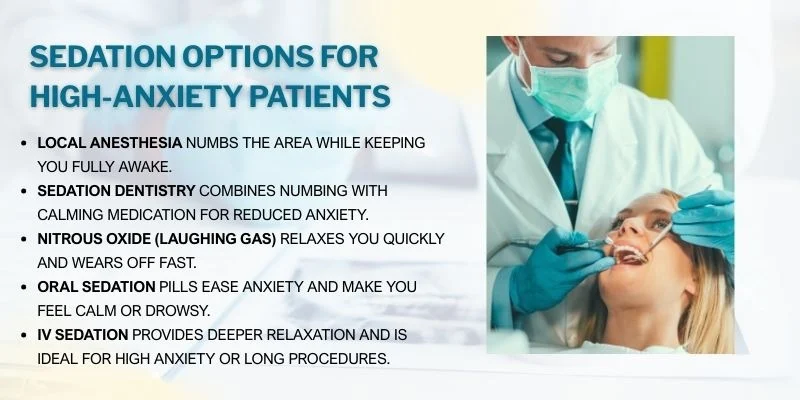
Sedation dentistry reduces reported anxiety levels in over 90% of highly anxious dental patients.
Local Anesthesia and Sedation Dentistry
Local anesthesia is the most common way to numb the area where oral surgery happens. It blocks pain but doesn’t affect your awareness.
This option lets you stay awake and alert while keeping you comfortable. Usually, the numbness fades a few hours after your procedure.
Sedation dentistry goes beyond just numbing. It combines local anesthesia with medication that helps reduce anxiety.
You may feel calm or slightly sleepy but still awake. This is sometimes called minimal or conscious sedation.
It’s a good option if you get nervous but don’t want to lose control. Your oral and maxillofacial surgeon carefully adjusts the dose to match your anxiety level and procedure type.
Nitrous Oxide and Laughing Gas
Nitrous oxide, also known as laughing gas, is a gentle way to calm nerves during oral surgery. You breathe it in through a small mask, and it helps you relax quickly.
You remain fully awake and can communicate with your dentist. It works fast, and the effects wear off in minutes after the gas is stopped.
This means you won’t feel drowsy for long and can usually drive yourself home. Nitrous oxide is often combined with local anesthesia to control pain and anxiety at the same time.
It’s safe for most patients and popular for mild to moderate dental fears.
Oral Sedation and IV Sedation
Oral sedation involves taking a pill before your appointment to reduce anxiety. Common medications include benzodiazepines like diazepam or lorazepam.
These pills make you calm and sometimes drowsy but still able to respond to the surgeon. The effects start in about 30 to 60 minutes.
IV sedation is stronger and works faster. It’s given through a vein, allowing the surgeon to control the level of sedation more precisely.
This method can bring you to moderate or conscious sedation, where you feel deeply relaxed but awake enough to follow instructions. Some patients who have very high anxiety or need longer procedures benefit from IV sedation.
Both oral and IV sedation require monitoring of your airway and vital signs to keep you safe. Your surgeon will help choose the best option based on your health and how anxious you feel.
Nervous About Oral Surgery? Learn Your Sedation Options
Choosing the Right Sedation Method
Picking a sedation method that fits your needs helps make oral surgery easier and less stressful. The best choice depends on your health, the type of surgery, and how much sedation you need.
Safety and careful monitoring during your procedure are also key factors to consider.
Assessing Patient Needs and Medical History
Your oral surgeon will start by looking closely at your medical history. This includes any allergies, medications you take, and past reactions to anesthesia.

Knowing your level of dental anxiety is important too, as it guides whether mild or deep sedation is best for you. If you have conditions like heart issues or respiratory problems, some sedation methods may not be safe.
Your surgeon will consider all this to suggest the safest option. Be honest about your fears and health so the sedation chosen keeps you comfortable and protected throughout the surgery.
Types of Oral Surgeries and Sedation Recommendations
Different surgeries call for different sedation levels. For minor treatments like a tooth extraction, often just local anesthetic is enough to numb the area and keep you awake.
If you feel nervous, mild sedation like nitrous oxide (laughing gas) may help you relax while staying alert. More complex procedures, such as wisdom teeth removal or maxillofacial surgery, may require stronger sedation.
Oral sedation through a pill can calm you without putting you fully to sleep. For extensive surgeries, IV sedation or general anesthesia might be needed to ensure you don’t feel pain or remember discomfort.
Your surgeon will match sedation to the procedure’s length and difficulty, balancing safety with your comfort during oral surgery.
Safety and Monitoring During Sedation
Safety is a top priority when you’re sedated. During your procedure, trained staff will watch your vital signs closely; including heart rate, breathing, and oxygen levels.
This helps catch any problems early and ensures the sedation works well without risks. The choice of sedation also affects recovery time.
For example, nitrous oxide wears off quickly so you can go home soon after. Oral sedation and IV sedation usually require you to have someone drive you, as you may feel drowsy afterward.
You’ll be carefully monitored until it’s safe for you to leave, making sure your experience is both comfortable and secure throughout the entire process.
Behavioral Techniques to Reduce Anxiety
Managing anxiety during oral surgery often involves simple, effective methods you can use to feel calmer and more in control. These include clear communication to ease worries, ways to relax your body and mind, and techniques that help take your focus away from the procedure.
Communication and Patient Education
One of the best ways to reduce your anxiety is through open and honest communication with your oral surgeon. When you understand each step of the procedure, it lowers uncertainty, which is a big cause of fear.
Your surgeon can explain what will happen, how long it will take, and what you might feel. You should feel comfortable asking questions or sharing your fears.
This builds trust and helps your care team adjust their approach to your needs. Knowing what to expect reduces “state anxiety,” the stress you feel right before or during surgery.
Sometimes, informational pamphlets or videos can prepare you beforehand. These resources break down complex information into clear, easy points, making you feel confident and ready.
Relaxation Techniques in Oral Surgery
Relaxation exercises are great tools you can practice before and during the procedure to calm your body. Deep breathing is the simplest.
Taking slow, deep breaths lowers your heart rate and slows your breathing, which helps reduce tension quickly. Another helpful method is progressive muscle relaxation.
You tense and then slowly release different muscle groups, starting from your feet and moving up. This shifts your focus away from anxiety and loosens tight muscles caused by stress.
Practicing these regularly before surgery can improve your overall calmness. Your oral surgeon or dental team may guide you through these techniques to use them effectively when you’re in the chair.
Visualization and Distraction Methods
Using your imagination can ease anxiety by shifting your mind from the dental environment. Visualization involves picturing a calm, happy place, like a beach or forest.
Imagining yourself there helps reduce stress and stops your body’s fight-or-flight response. Distraction methods work by pulling your attention away from the procedure.
Listening to music, audiobooks, or even guided hypnosis recordings can help. Some practices now use virtual reality (VR) to create immersive experiences that provide strong mental breaks.
Combining these with relaxation and communication can make your visit smoother and less stressful. You might find one technique works best for you or a mix of several.
Post-Surgery Support for Anxious Patients
After oral surgery, your feelings of anxiety may return as the effects of sedation fade. Taking clear steps to manage these emotions and follow your care instructions can help your recovery go more smoothly and comfortably.
Managing Anxiety During Recovery
It’s normal to feel nervous or unsettled once you leave the dental office. Try using deep breathing exercises or listening to calming music to help lower your heart rate and stress.
Create a quiet, comfortable space for rest. Use a soft blanket and dim lighting to keep your environment soothing.
Avoid any loud noises or sudden movements that might make you feel uneasy. If your anxiety feels hard to control, don’t hesitate to reach out to your healthcare provider.
They may suggest gentle medications or a quick check-in call for reassurance.
Follow-Up and Aftercare Instructions
Following your surgeon’s instructions carefully is key. You’ll likely get written guidelines that explain what to do about pain, swelling, and diet.
Make sure you understand when to take prescribed pain medicine and how to care for your surgical site. If there are signs of infection or unusual pain, contact your surgeon right away.
Try to have someone with you for the first 24 hours after surgery. This extra support helps you stay calm and gives you assistance if you need it.
Keep a checklist handy:
- Take medications as directed
- Avoid chewing near the surgery site
- Keep your head elevated when resting
- Use ice packs to reduce swelling
These steps help you heal faster and lower post-operative anxiety.
Frequently Asked Questions
Many ways exist to help you feel calm during oral surgery. These include medication and special techniques that reduce fear and make your visit easier.
What methods do oral surgeons use to alleviate anxiety in patients?
Oral surgeons often use sedation to help you relax. They can offer oral sedatives, nitrous oxide (laughing gas), or IV sedation depending on your comfort level.
Besides medication, they create a calm environment and talk through your fears to ease your mind. Your surgeon may also explain each step of the procedure to keep you informed and reduce stress.
Are there specific behavioral techniques used in dentistry to manage fear?
Yes. Techniques like guided breathing, distraction, and gradual exposure to dental settings help lower anxiety.
Some dentists use calming communication, keeping a friendly tone and clear instructions to make you feel safe. Building trust and providing reassurance throughout your visit also work well.
What types of sedation are available for high-anxiety dental patients?
You can choose from several sedation options. Minimal sedation like nitrous oxide relaxes you but keeps you awake.
Moderate sedation usually involves oral pills or IV medication to make you drowsy but conscious. Your oral surgeon will discuss which method fits your needs best.
How can Cognitive Behavioral Therapy (CBT) help with dental anxiety?
CBT teaches you how to change negative thoughts about dental visits. It helps you face your fears step by step, making them less intense over time.
By learning coping skills and relaxation techniques, you can reduce anxiety before and during your appointments.
What is the process for assessing a patient’s level of dental anxiety?
Your oral surgeon may ask you questions about your dental history, fears, and reactions to past treatments. Sometimes, you’ll fill out a survey to measure your anxiety level.
This helps them pick the right sedation and support methods to match how anxious you feel.
How are extreme cases of dental phobia addressed by oral health professionals?
If your fear is very strong, professionals may combine sedation with behavioral therapies like CBT.
They might also schedule multiple short visits to gradually build your comfort.
Some oral surgeons work closely with mental health experts to create a plan that meets your unique needs.